Table of contents
Quick answer
In 2026 Dubai added 5% VAT to Salik tolls and public parking from 1 June, raised peak-hour toll crossings and began phasing out cash at parking meters. On a rental car the company's own Salik account pays each crossing, and the charges are passed back to you — usually against the deposit or a card on file — so the 2026 changes reach renters through the recharge, not a separate bill. Tolls, tariffs and rules change, so confirm the current figures with Salik and the RTA before you drive.
How Salik works on a rental car
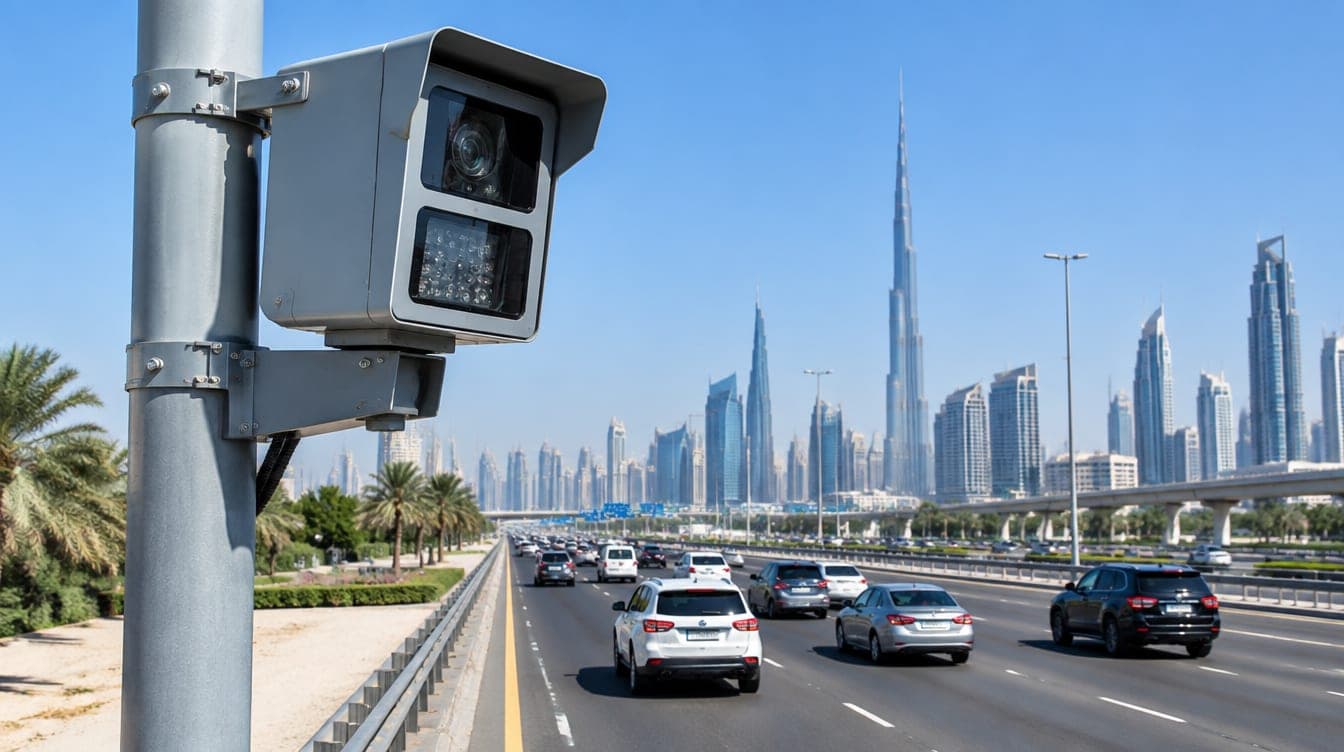
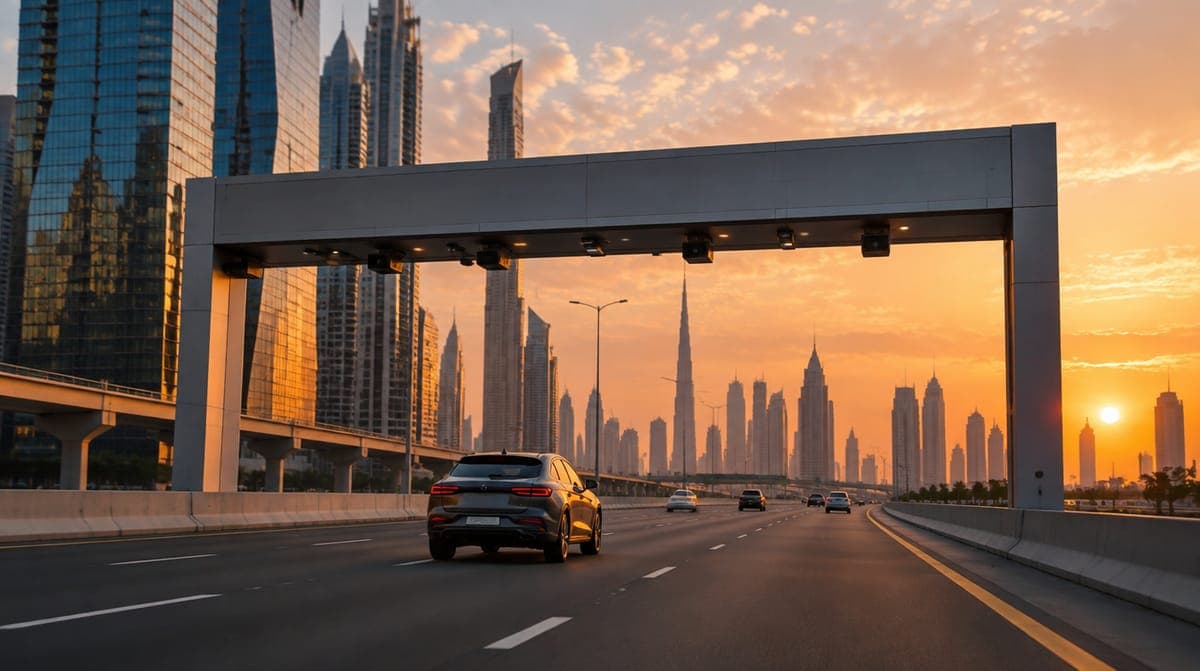
Salik is Dubai's automatic road toll. There are no cash booths: a car passes under a gantry, a camera reads the plate, and the vehicle's Salik account is charged. On a rental, that account belongs to the company, not to you, so you do not buy a tag or top up anything yourself — the car already has an account, and each crossing is logged against it.
What matters for your budget is how the company passes those crossings back. Many recharge the exact tolls at the end of the rental, some add a small per-crossing admin fee, and a few use a flat daily toll cap instead of itemising. Ask which method applies before you drive, because an admin fee on a route with several gates can add more than the tolls themselves. For how extras like this stack up, see the hidden costs of car rental guide, and turn a daily rate into an all-in figure with the fees and true-cost tool.
| Method | What it means | Watch for |
|---|---|---|
| Exact tolls recharged | What it meansYou pay the real crossings, nothing added | Watch forAsk for the crossing log so the total matches |
| Tolls plus an admin fee | What it meansA small fee is added per crossing or per rental | Watch forOn a multi-gate route the fee can exceed the tolls |
| Flat daily toll cap | What it meansA fixed daily amount regardless of crossings | Watch forCan cost more than exact tolls on a low-driving day |
Methods and amounts vary by company and change over time. Confirm how your rental bills tolls before you drive, and keep the contract.
Keep a rough count of your own crossings — Sheikh Zayed Road alone has several gates — so the recharge at the end matches what you actually drove.
What changed in 2026: 5% VAT on tolls and parking
The main 2026 change is tax, not a new fine structure. From 1 June 2026, 5% VAT applies to Salik tolls and to public parking in Dubai, and the authorities have said the toll VAT was applied retrospectively to earlier toll revenue as well. At the time of writing, peak-hour Salik crossings were reported at around AED 6.3, with lower off-peak pricing, and the standard public-parking rate nudged up by a few fils an hour. Treat those as reported figures, not a quote — check the live rates on Salik's and the RTA's own channels before you rely on a number.
Dubai is also phasing out cash at parking meters, so plan to pay by the parking apps, a card or a Nol card rather than coins. None of this changes how a rental is billed: the company's Salik account still pays, and the slightly higher, VAT-inclusive crossings and parking simply flow through to you in the recharge. The Salik toll fine is capped at AED 10,000 per vehicle per calendar year — a cap set in earlier terms, not new for 2026 — and on a rental the company manages the account, so you are unlikely to meet it.
| Change | Applies from | What it means for a renter |
|---|---|---|
| 5% VAT on Salik tolls | Applies from1 June 2026 | What it means for a renterEach crossing costs a little more, passed on in the recharge |
| 5% VAT on public parking | Applies from1 June 2026 | What it means for a renterHourly parking is slightly higher, VAT included |
| Higher peak toll rate | Applies fromReported around AED 6.3 peak | What it means for a renterBusy-hour crossings cost more than off-peak |
| Cash phased out at meters | Applies from2026 | What it means for a renterPay by app, card or Nol, not coins |
Figures reported at the time of writing and subject to change. Salik and the RTA publish the current rates and rules.
How much do Salik and parking add to a Dubai trip?
There is no single answer, because it depends entirely on where you drive. A visitor who stays around one area and parks at hotels and malls may cross very few toll gates and pay little; someone commuting daily along Sheikh Zayed Road can pass several gates each way, and the crossings add up. Parking is similar — free in many residential and mall areas, metered in the busiest districts.
As a rough guide at the time of writing, a light tourist week often means only a handful of crossings, while regular city driving can run to a few dirhams a day in tolls plus any metered parking, all VAT-inclusive from June 2026. Those are reference points, not a prediction for your route — map your likely drives against the gate locations, and fold the expected tolls and parking into the all-in cost with the fees and true-cost tool rather than judging a rental on its daily rate alone.
If your plans keep you to the Metro corridor and walkable districts, you may barely touch Salik at all — weigh that against whether you need a car every day.
Tolls, top-ups and fines — who is responsible
Keep three things separate: a toll is the charge for a crossing; a top-up fine can apply when a Salik account runs out of balance and is not refilled in time; and a traffic fine is a penalty for a driving offence. On a rental, the company runs the Salik account, so top-up fines are its concern, not yours — but unpaid tolls and any traffic fines you incur during the rental can be deducted from your deposit or charged to the card on file after you return the car.
That is why the deposit and the fine window matter. Fines can take time to appear, so a company may hold part of your deposit until the record is clear. Before you fly home, it is worth checking whether anything is outstanding against the car you drove — our guide on how to check and pay Dubai traffic fines walks through doing that by plate and through the official apps.
What to check before you drive in Dubai in 2026
- Ask how the company bills Salik — exact tolls, tolls plus an admin fee, or a flat daily cap.
- Confirm whether there is a per-crossing or per-rental toll admin fee, and how parking is handled.
- Check how long the deposit is held after return, since tolls and fines can appear late.
- Map your likely routes against the toll gates so the tolls are not a surprise.
- Plan to pay any metered parking by app, card or Nol — cash is being phased out.
- Keep the rental contract and confirm the current rates with Salik and the RTA, as tariffs change.
Frequently asked questions
Do I pay Salik separately on a rental car in Dubai?
Not directly. The rental car already has a Salik account that belongs to the company, and each toll crossing is charged to it automatically. The company then passes the tolls back to you, usually against your deposit or a card on file, sometimes with a small admin fee. Ask how your rental bills tolls before you drive.
Is there VAT on Salik now?
Yes. From 1 June 2026, Dubai applies 5% VAT to Salik tolls and to public parking, and the toll VAT was applied retrospectively to earlier revenue as well. Each crossing and each hour of metered parking therefore costs a little more, VAT included. Rates and rules change, so confirm the current figures with Salik and the RTA.
How much is a Salik crossing in 2026?
At the time of writing, peak-hour crossings were reported at around AED 6.3, with lower off-peak pricing, all VAT-inclusive from June 2026. Treat that as a reported figure rather than a quote, because tariffs change and vary by time of day. Salik publishes the current rates.
What happens if a Salik toll is not paid on a rental car?
The company manages the Salik account, so an unpaid-toll or top-up issue is normally its responsibility rather than yours. However, tolls you ran up during the rental are passed back to you, and unpaid tolls or traffic fines can be deducted from your deposit after you return the car. Check that nothing is outstanding before you leave the country.
Can parking fines come out of my rental deposit?
Yes. A parking fine or traffic fine incurred while you had the car can be charged to your deposit or the card on file, often after the car is returned, because fines can take time to appear. Companies may hold part of the deposit until the record is clear. Keep your parking payments and the contract in case of a dispute.
Do I need a Salik tag for a rental car?
No. Salik is account-based and camera-read, not a physical tag you buy, and the rental car already has an account set up by the company. You do not register, top up or attach anything. You simply drive, and the crossings are billed back to you by the company at the end of the rental.
Written by the TripReview team from our own price benchmarks and the rules published by UAE authorities, and updated 1 November 2026. Figures are ranges, not quotes — check the latest rules with the official source before you travel. How we rate companies