Table of contents
Quick answer
Al Ain, the UAE's 'Garden City', is about 130 km from Dubai — a 1.5-hour drive on the paved E66 (the Dubai–Al Ain road), and an easy day trip by car with no 4x4 needed. The headline drive is Jebel Hafeet, the mountain on the edge of the city, whose smooth switchback road to the summit is one of the best in the country. In town there is the green Al Ain Oasis and its old falaj channels, the camel market, Al Jahili Fort, Al Ain Zoo, and the hot springs at Green Mubazzarah below the mountain. Al Ain is in the Abu Dhabi emirate and sits on the Oman border, which is worth knowing for fines and navigation.
Dubai to Al Ain: route, distance and time
Al Ain is about 130 km inland from Dubai, and the drive takes around 1.5 hours in normal traffic. The direct way is the E66, the Dubai–Al Ain Road, which runs straight out through the desert from the south of the city — a fast, flat, well-surfaced highway that any car handles. There is nothing technical about the drive out; the scenery is open desert and dunes most of the way.
Leaving Dubai you will pass through a Salik toll gate or two depending on your route; the E66 itself has no further tolls. Fill up before you go — fuel is cheap and there are stations along the way, but it is one less thing to think about on a day trip.
Set off early. Jebel Hafeet and the oasis are best in the cooler morning, and you miss the worst of the traffic heading back into Dubai in the evening.
The Jebel Hafeet mountain road
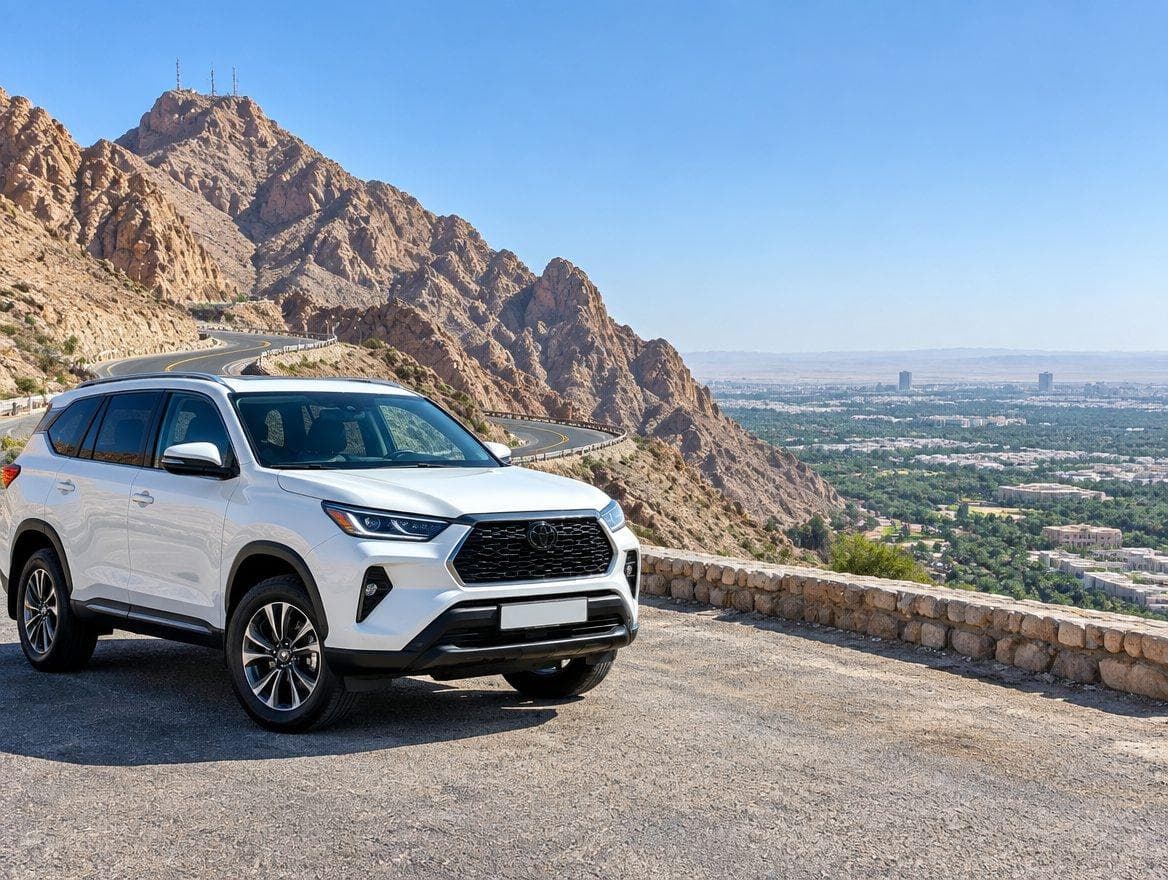
Jebel Hafeet is the reason many people drive to Al Ain. The mountain rises straight out of the plain at the edge of the city, and the road to the top winds up its face in a long series of smooth, wide switchbacks to viewpoints and a car park near the summit — the view over Al Ain, the desert and across to Oman is the payoff, and it is spectacular at sunset.
It is a proper mountain road but a perfectly ordinary one to drive: fully paved, well engineered, with crash barriers and marked laybys. Any car does it — take the bends steadily, use low gears or the brakes sensibly on the way down to save them from overheating, and pull into the laybys for photos rather than stopping on the road. At the base is Green Mubazzarah, a park with warm natural springs and chalets.
What to see in Al Ain
Al Ain is low-rise, green and unhurried — a complete change from Dubai, and a UNESCO World Heritage city for its oases and falaj irrigation.
- Al Ain Oasis — a vast working date-palm oasis in the centre of town, cool and shaded, with a walkway through the old falaj water channels.
- Jebel Hafeet — the mountain road and summit viewpoints, and Green Mubazzarah's hot springs at the base.
- Al Ain Camel Market — one of the last traditional livestock markets in the UAE, liveliest in the morning.
- Al Jahili Fort — a restored mud-brick fort with a gallery on the explorer Wilfred Thesiger.
- Al Ain Zoo — a large, well-regarded zoo and safari park on the lower slopes of Jebel Hafeet.
- Qasr Al Muwaiji and the Al Ain National Museum — for the city's history and the ruling family's roots here.
Al Ain is in Abu Dhabi — and on the Oman border
Two things catch Dubai drivers out. First, Al Ain is part of the Abu Dhabi emirate, not Dubai. Driving rules are the same across the UAE, but a fine picked up here is an Abu Dhabi Police fine, and on a rental it is still billed back to you through the company in the usual way — so the same care with speed cameras applies.
Second, Al Ain shares an open city with Al Buraimi in Oman, and some roads run close to or across the border. Do not cross into Oman by accident: a rental car needs the company's written permission and separate Oman insurance to leave the UAE, and crossing without them voids your cover. Stay on the main UAE roads and follow signs for Al Ain, not Buraimi or Oman, unless you have arranged an Oman trip in advance.
When to go, and day trip or overnight
October to April is the season — warm, clear days that are comfortable for the oasis, the markets and the mountain. Summer is very hot inland, hotter than Dubai, though Jebel Hafeet's summit is a few degrees cooler than the plain. Weekends are busier on the mountain road and at the springs.
Al Ain works well as a day trip: the oasis and a fort in the morning, lunch in town, Jebel Hafeet for the late-afternoon light, and back to Dubai by evening. An overnight — in town or in a chalet at Green Mubazzarah — lets you take it slowly and catch both sunset and sunrise on the mountain.
Fuel, Salik and what to bring
A short checklist for the day.
- Fuel: fill up before you leave Dubai; petrol is cheap and there are stations on the E66.
- Tolls: you pass a Salik gate or two leaving Dubai; the E66 and Al Ain itself have none.
- Car: any car is fine, including up Jebel Hafeet — the road is fully paved. No 4x4 needed.
- Fines: Al Ain is Abu Dhabi territory — watch the speed cameras; a fine is billed back through the rental company.
- Oman border: do not cross into Al Buraimi or Oman without the company's permission and Oman insurance.
- Bring: water, sun protection, and cash for the camel market and small cafés.
Frequently asked questions
How far is Al Ain from Dubai, and how long does it take to drive?
Al Ain is about 130 km from Dubai, and the drive takes around 1.5 hours in normal traffic. The direct route is the E66, the Dubai–Al Ain Road — a fast, flat, paved highway through the desert that any car handles.
Do I need a 4x4 to drive to Al Ain or up Jebel Hafeet?
No. The E66 and the Jebel Hafeet mountain road are both fully paved and open to any car. A 4x4 is only needed for off-road and dune driving, which a standard rental's insurance does not cover in any case.
What is there to do in Al Ain?
The Jebel Hafeet mountain road and summit views, the green Al Ain Oasis and its falaj channels, the camel market, Al Jahili Fort, Al Ain Zoo, and the hot springs at Green Mubazzarah below the mountain. It is a UNESCO World Heritage city and an easy change of pace from Dubai.
Is Jebel Hafeet worth driving up, and can any car do it?
Yes — it is one of the best driving roads in the UAE, with sweeping switchbacks to viewpoints over Al Ain and across to Oman, and it is spectacular at sunset. The road is fully paved and engineered for ordinary cars; just take the bends steadily and go easy on the brakes on the way down.
Is Al Ain in Dubai or Abu Dhabi?
Al Ain is part of the Abu Dhabi emirate, not Dubai. The driving rules are the same UAE-wide, but a fine picked up in Al Ain is an Abu Dhabi Police fine and is billed back to you through the rental company in the usual way, so the same care with speed cameras applies.
Can I drive to Al Ain as a day trip from Dubai?
Yes. A day trip works well — the oasis and a fort in the morning, Jebel Hafeet for the late-afternoon light, and back to Dubai by evening. An overnight in town or at Green Mubazzarah lets you take it more slowly and see both sunset and sunrise on the mountain.
Is there a border crossing to Oman at Al Ain?
Al Ain shares an open city with Al Buraimi in Oman, and some roads run close to the border. Do not cross by accident — a rental car needs the company's written permission and separate Oman insurance to leave the UAE, and crossing without them voids your cover. Follow signs for Al Ain, not Buraimi or Oman, unless you have arranged an Oman trip in advance.
Written by the TripReview team from our own price benchmarks and the rules published by UAE authorities, and updated 7 October 2026. Figures are ranges, not quotes — check the latest rules with the official source before you travel. How we rate companies