Table of contents
Quick answer
Dubai is very easy for vegetarian and Indian-food travellers from India. Pure-vegetarian restaurants, thali houses, South Indian dosa places and chaat counters are ordinary neighbourhood businesses, especially in Bur Dubai, Meena Bazaar, Karama and parts of Deira, and Hindi and Urdu are widely spoken. Jain and no-onion-no-garlic cooking is available too, but it means different things in different kitchens, so say exactly what you avoid before the dish is cooked. The caveat is outside Indian restaurants, where 'vegetarian' can still include egg, stock or gelatine and halal is the default for meat, so ask.
How easy is it to eat vegetarian in Dubai?
Very easy, and the reason is who lives here. Indian officials have put the Indian community in the UAE at more than 4.3 million, with more than half of it in Dubai, so Indian vegetarian cooking is not a niche. Pure-vegetarian restaurants, Gujarati and Rajasthani thali houses, South Indian dosa and idli places and chaat counters are ordinary neighbourhood businesses, far more of them than a short guide can list. Indian menus usually separate or mark the vegetarian dishes, so a quick scan is enough.
The ease is strongest in the districts and restaurants that serve Dubai's Indian community. At a steakhouse or a seafood-led menu you may find only a handful of vegetarian dishes, and a 'vegetarian' label does not always mean what it means in India, because egg, meat stock and gelatine can slip in. Dubai also has vegetarian-friendly food from the Middle East and Africa, and some dedicated plant-based restaurants, covered in the last section.
Where to find Indian food: the neighbourhoods
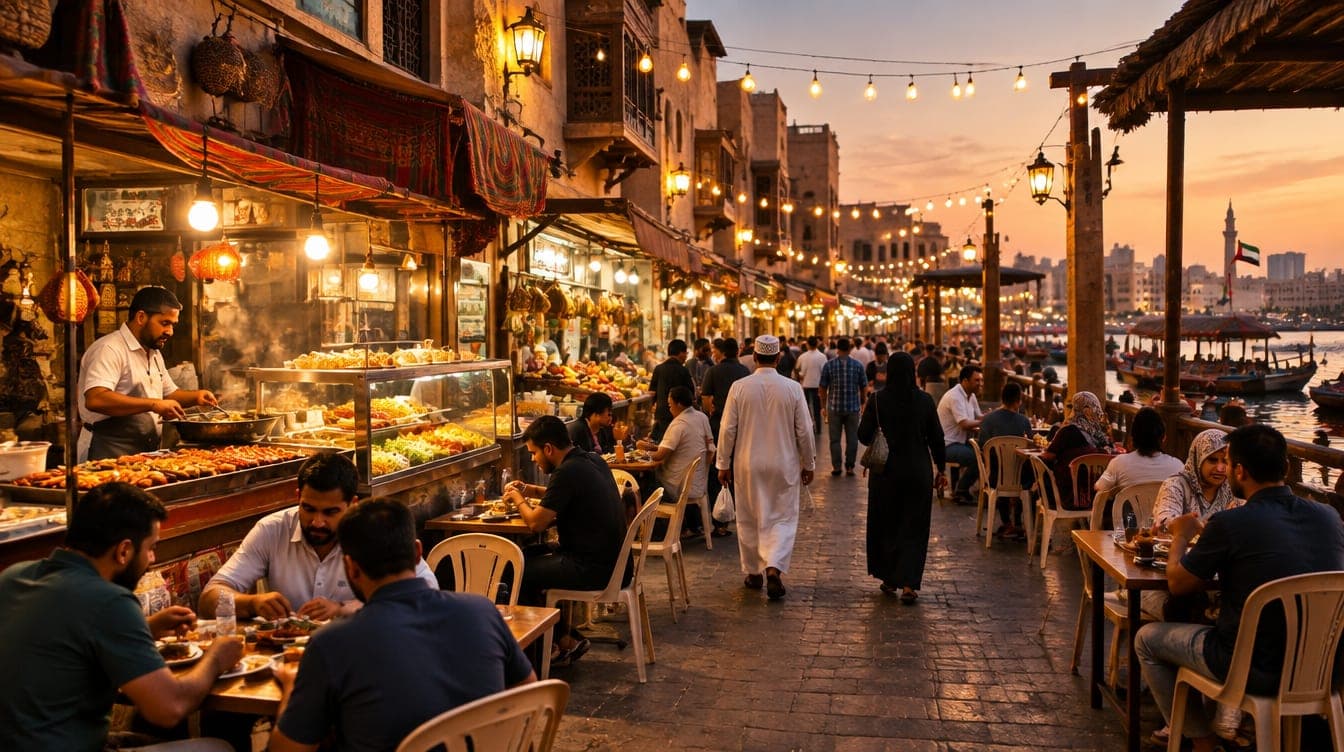
Start in Bur Dubai. Meena Bazaar, the crowded lanes off Al Fahidi Street, is nicknamed Little India and is full of inexpensive Indian eateries: thali houses serving Gujarati and Rajasthani meals, and snack counters selling pani puri, samosas, aloo vada sandwiches, dahi vada and masala dosa. Bur Dubai is also where much of Dubai's Jain community has historically lived.
Karama, a short ride away, is packed with budget eateries. South Indian restaurants serving dosa, idli and thali sit alongside North Indian and Gujarati places and chaat counters, and Pakistani, Sri Lankan and Filipino restaurants share the same streets.
Deira, across the Creek, is more mixed, with Iranian, Arab and Indian eateries side by side. Published listings of its Indian restaurants include places in Al Rigga, Naif and Port Saeed, and pure-vegetarian South Indian places serving dosa, idli and thali are the most common style among them. Abras, the traditional water taxis, cross the Creek between Bur Dubai and Deira, so you can eat on both sides in a day.
You do not have to go to Old Dubai for every meal. Indian restaurants with vegetarian menus also operate in newer districts such as Al Nahda, Jumeirah Lakes Towers (JLT) and Discovery Gardens, so check the map near your hotel.
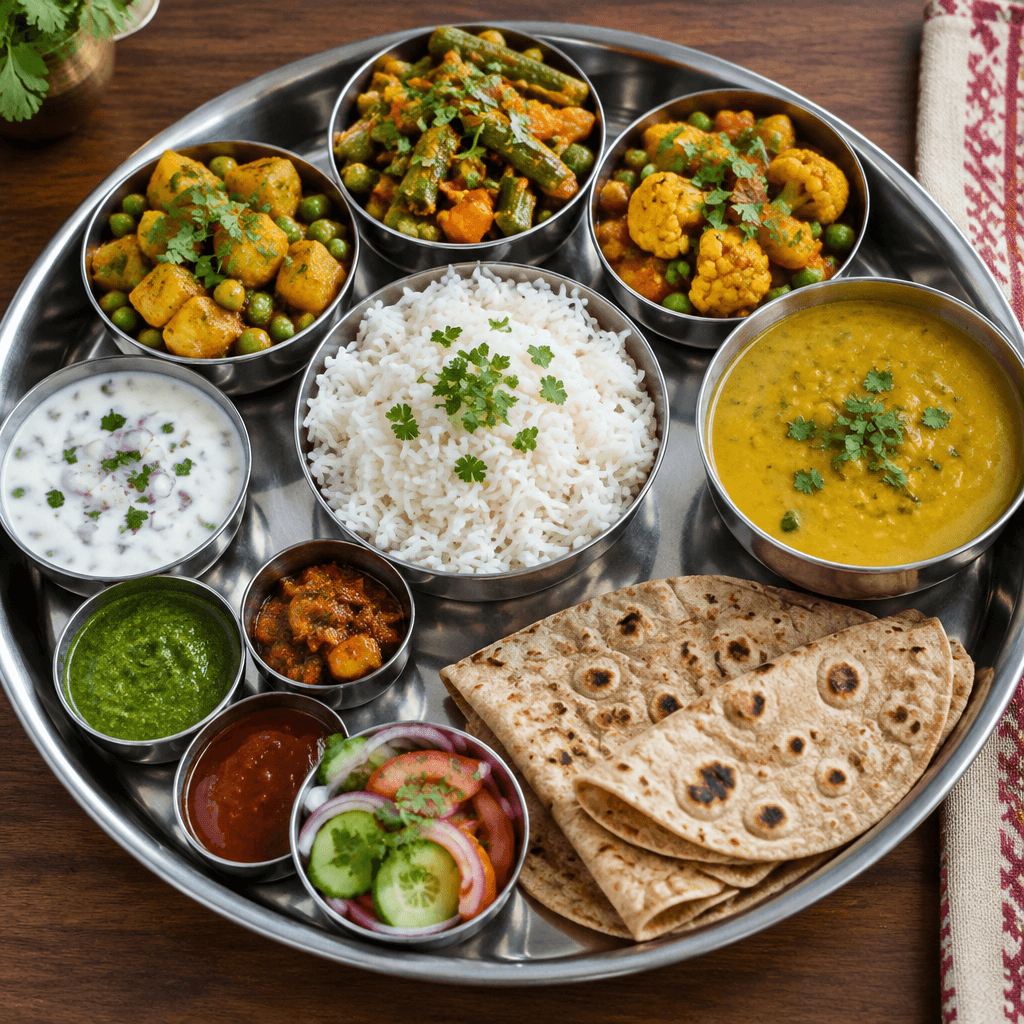
Prices in the older districts are modest by Dubai standards. A meal is typically AED 15–35 and published thali prices run from roughly AED 20 to AED 50; at the time of writing a dirham is worth about ₹25–26, so AED 15–50 is roughly ₹400–1,300, though rates vary. Similar dishes in Downtown or the Marina can cost several times more, and VAT or a service charge may be added, so check whether the menu price includes them.
Jain, satvik and no-onion-no-garlic food
Jain and no-onion-no-garlic food is available, and staff in Indian restaurants generally understand the request. Some kitchens are Jain or satvik throughout and cook without onion and garlic by default, some keep a separate Jain menu or thali, and many others will adapt a dish if you ask. Karama and Meena Bazaar are the usual places to look, and it is worth asking which of the three a restaurant is before you sit down.
Be specific, because the words cover different lists. 'No onion, no garlic' is the baseline; a Jain diet usually also leaves out root vegetables such as potato, and practice varies between families. Say your list at the start, for example 'Jain, no onion, no garlic, no potato', and check the side dishes too, since gravies, chutneys and ready-made masalas can contain onion or garlic. In a kitchen that is not Jain throughout, oil or a tawa may be shared with onion-and-garlic dishes, which matters to strict followers.
Festival fasting menus are a different thing. Around Navratri many Indian restaurants in Dubai publish fasting (vrat or upvas) thalis, but these follow fasting rules, not Jain rules, and often include potato dishes, so check each item separately.
Say it before the dish is cooked: a kitchen can leave onion and garlic out of a fresh dish, but it cannot take them out of a gravy that is already made.
Beyond Indian food: other cuisines, hotels and self-catering
Vegetarian eating in Dubai is not limited to Indian restaurants. Lebanese and Palestinian places serve hummus, cheese pastries and za'atar breads; Egyptian koshari, Sudanese fava-bean dishes and Ethiopian vegetarian fasting platters are all on offer; and there are dedicated vegan and plant-based restaurants in several districts. Apply the checks above on stock, egg and shared fryers.
Hotels vary. Before you book, ask whether the breakfast and dinner menus include vegetarian and Indian dishes and whether the kitchen can prepare Jain or no-onion-no-garlic meals if you tell it in advance, because policies differ from property to property. At a buffet, serving spoons and hot plates may be shared with meat dishes, so ask the chef if that matters.
Self-catering is straightforward. Indian grocers and supermarkets in Karama, Bur Dubai, Meena Bazaar, Deira and many residential districts stock spices, pulses, grains, desi ghee and pickles, mainstream supermarkets carry Indian products too, and some Indian supermarkets offer online ordering with home delivery. The Spice Souk in Deira, close to the abra landing across the Creek from Bur Dubai, sells spices, herbs and nuts. If you book an apartment, check that the listing includes a kitchen.
Buy staples in Dubai instead of carrying them from India. Dubai Customs' list of banned items includes cooked and home-made foods and names poppy seeds (khus khus), and Indian airports have their own limits on food in cabin baggage, so check Dubai Customs and your airline before you pack any food.
Frequently asked questions
Is there vegetarian food in Dubai?
Yes, plenty. Pure-vegetarian Indian restaurants, thali houses, South Indian dosa and idli places and chaat counters are common, especially in Bur Dubai, Meena Bazaar, Karama and parts of Deira, and there is vegetarian-friendly food from the Middle East and Africa too. Look for 'pure veg' on the sign or listing if you want a fully vegetarian kitchen, and outside Indian restaurants ask whether 'vegetarian' dishes contain egg, stock or gelatine.
Is Jain food available in Dubai?
Yes. Some Indian kitchens in Dubai cook Jain or satvik food throughout, some keep a separate Jain menu or thali, and many will adapt dishes on request. Say 'Jain' and list what you avoid, such as onion, garlic and potato, before the dish is cooked, because practice differs between kitchens. For a hotel, ask in advance whether the kitchen can prepare Jain meals.
Which areas of Dubai have pure vegetarian Indian restaurants?
Bur Dubai (including Meena Bazaar), Karama and parts of Deira, such as Al Rigga, are the main older districts for Indian vegetarian food, and newer areas such as Al Nahda, JLT and Discovery Gardens have Indian restaurants with vegetarian menus too. Listings change, so check that a place is open and fully vegetarian before you go.
Is Indian food in Dubai expensive?
It depends where you eat. In the older districts a meal is typically AED 15–35 and published thali prices run from roughly AED 20 to AED 50, which at the time of writing is roughly ₹400–1,300 at about ₹25–26 to the dirham. Similar dishes in hotels, malls and tourist areas can cost several times more, and VAT or a service charge may be added, so check the menu.
Can I carry Indian food or snacks from India to Dubai?
Be careful. Dubai Customs lists cooked and home-made foods among banned items and names poppy seeds (khus khus) among banned narcotics, so do not pack thepla, parathas, home-made sweets or khus khus. Indian airports and airlines also have separate rules on food in cabin baggage. For sealed, shop-bought packets, check Dubai Customs and your airline before you travel, because rules change; most staples can be bought in Dubai anyway.
Written by the TripReview team from our own price benchmarks and the rules published by UAE authorities, and updated 23 October 2026. Figures are ranges, not quotes — check the latest rules with the official source before you travel. How we rate companies