
Quick answer
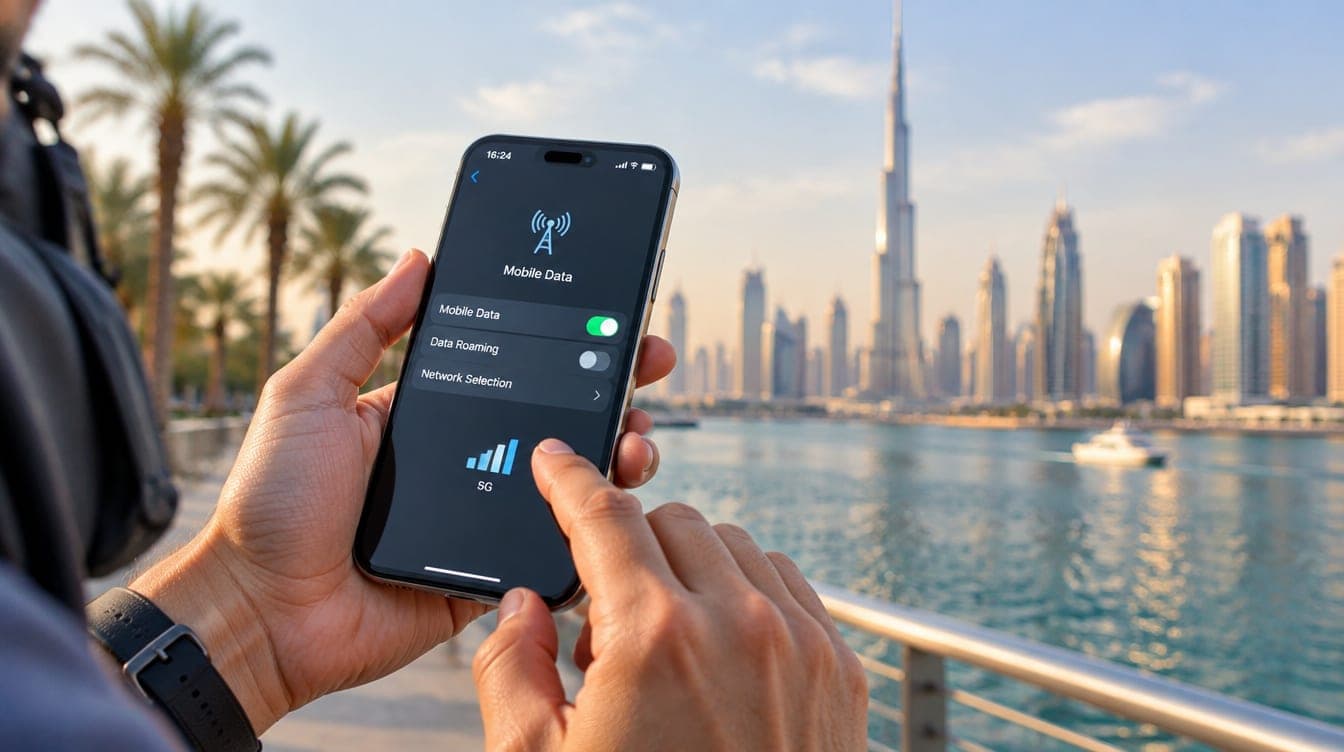
For most visitors an eSIM is the easiest option — buy it before you fly and it works the moment you land. A physical tourist SIM from the two local networks (e& and du) is easy to get at the airport and often includes generous data. Free Wi-Fi is widespread, so a light user can sometimes manage without either.
eSIM: the easiest option for most
An eSIM is a digital SIM you install on a compatible phone — no physical card, no queue. Buy a Dubai or UAE data plan from an eSIM provider before you travel, scan a QR code, and it activates when you arrive. It keeps your home number reachable on your physical SIM while the eSIM carries data.
It suits short trips and anyone who mainly needs maps, ride-hailing and messaging. Check your phone supports eSIM and is carrier-unlocked first.
A local tourist SIM
The UAE has two networks, e& (formerly Etisalat) and du. Both sell tourist SIMs with a chunk of data and some local minutes, and you'll see their counters right in the arrivals hall at the airport. You need your passport to buy one.
A physical SIM makes sense if you want a local number, plan a longer stay, or your phone doesn't take an eSIM.
What it costs
| Option | Typical price | Best for |
|---|---|---|
| Travel eSIM (a few GB) | Typical priceAED 35–90 | Best forShort trips, ready on landing |
| Local tourist SIM | Typical priceAED 50–125 | Best forA local number, longer stays |
| Roaming from home | Typical priceVaries (often high) | Best forOnly if your plan includes the UAE |
Prices are typical ranges at the time of writing; airport SIM bundles change often, so compare what's included, not just the headline price.
Can you manage on Wi-Fi alone?
Hotels, malls, cafes, the Metro and many public areas have free Wi-Fi, and Dubai has public networks in parks and at the beach. A light user who stays on Wi-Fi can get by — but you'll want data the moment you're in a taxi, at the desert or comparing prices on the move.
Download offline maps and your ride-hailing app before you land, so you can get moving even before your data is sorted.
What you'll actually use it for
Getting around leans on data: maps, the Metro and bus apps, and Careem or Uber. If you rent a car, you'll want it for navigation and to check tolls and parking. And every price on this site updates live, so a connection lets you compare companies while you're out.
Frequently asked questions
Is an eSIM or a local SIM better for Dubai?
An eSIM is easiest for most visitors — buy it before you fly and it works on landing, keeping your home number active. A local SIM (e& or du) is better if you want a local number or a longer stay, and it's easy to buy at the airport with your passport.
Where can I buy a SIM card in Dubai?
Both networks, e& and du, have counters in the airport arrivals hall, and there are shops across the city and in malls. You'll need your passport.
How much does mobile data cost in Dubai?
As a benchmark, a travel eSIM with a few GB runs about AED 35–90, and a local tourist SIM about AED 50–125 at the time of writing. Compare what data and validity are included, not just the price.
Is there free Wi-Fi in Dubai?
Yes, widely — hotels, malls, cafes, the Metro and many public areas. A light user can manage on Wi-Fi, but data is far more convenient for maps and ride-hailing on the move.
Will my phone work in Dubai?
If it's unlocked and supports the local bands (most modern phones do), yes. For an eSIM, check your phone is eSIM-capable and carrier-unlocked before buying a plan.
Written by the TripReview team from our own price benchmarks and the rules published by UAE authorities, and updated 29 September 2026. Figures are ranges, not quotes — check the latest rules with the official source before you travel. How we rate companies