Table of contents
Quick answer
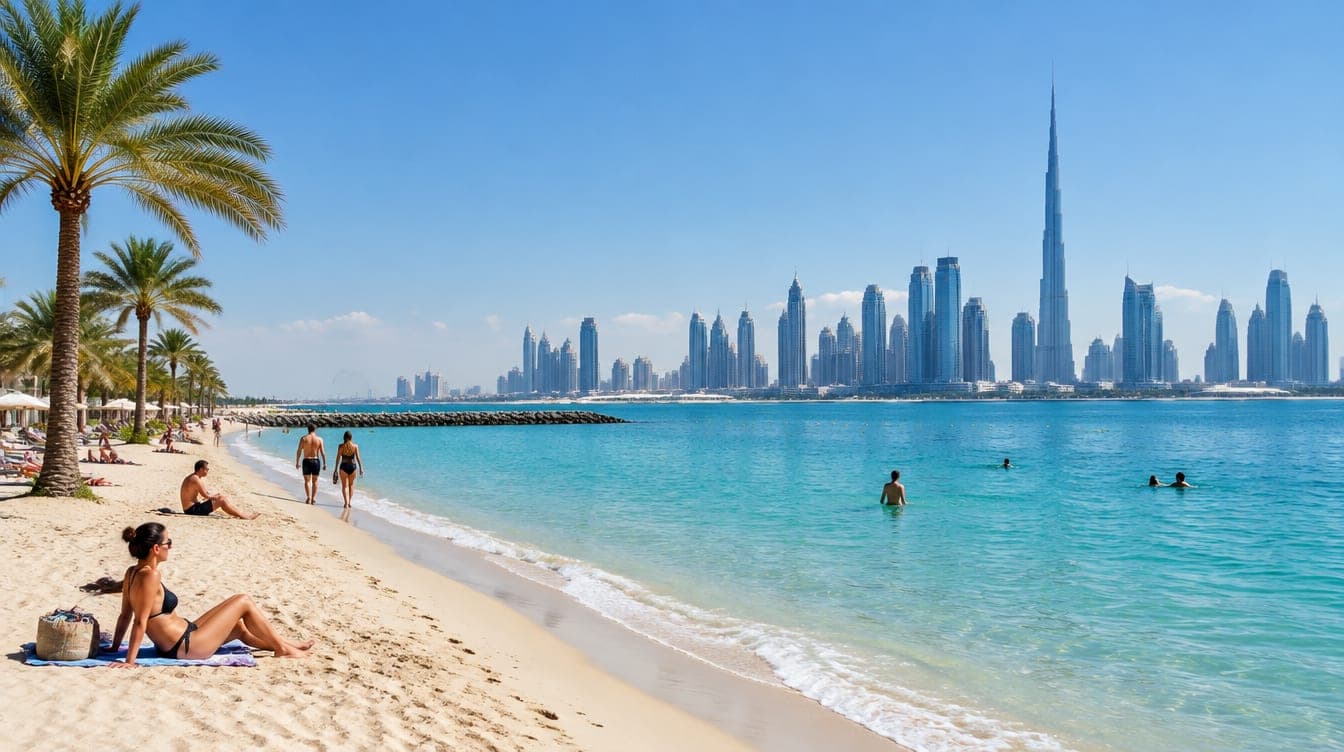
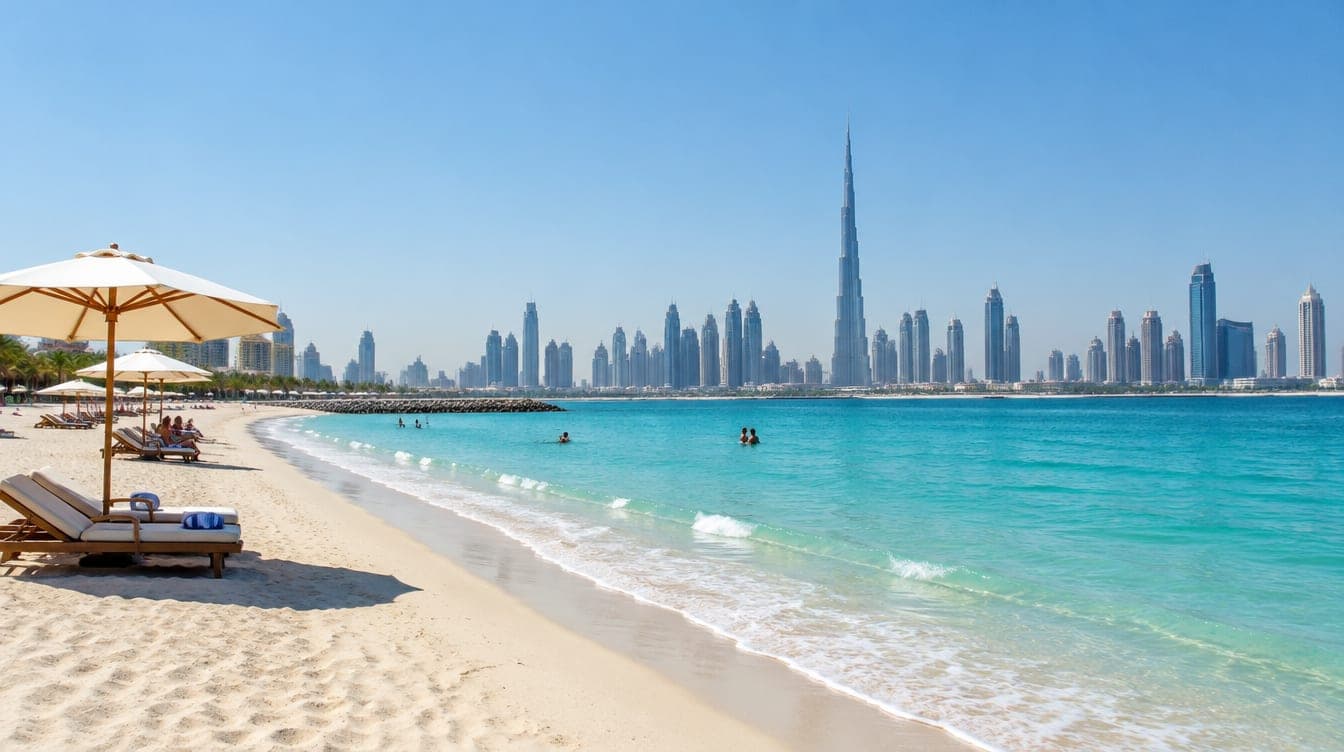
Dubai's coast is one long stretch of soft sand and warm, calm sea, and most of the best beaches are free. The busy, facility-rich public ones — JBR (The Beach), Kite Beach, La Mer and the Jumeirah stretch — have showers, cafés and watersports, while Umm Suqeim Beach is the spot for the classic Burj Al Arab view and Al Mamzar is the quiet, green, family option further north. Paid beach clubs sell day passes with sunbeds, pools and food if you want comfort and service. Which to pick comes down to what you are after: families and facilities (Kite Beach, JBR), views (Umm Suqeim), quiet (Al Mamzar), or dining and buzz (La Mer, JBR). The sea is swimmable year-round and best from October to April; watch the flag system, swim near lifeguards, and keep swimwear to the beach itself.
The best free public beaches
You do not need to pay to enjoy the sea in Dubai — the public beaches are free, open and, on the main stretches, well equipped. These are the ones most visitors use:
- JBR / The Beach — the most central and lively, backed by a promenade of cafés, shops and watersports at Jumeirah Beach Residence; busy, with plenty of facilities.
- Kite Beach — a long, clean, family-friendly stretch with showers, food trucks, a running track and watersports, and the Burj Al Arab in view down the coast.
- La Mer — a beach-and-dining district with a relaxed, colourful promenade; a good mix of sand, food and things for kids.
- Umm Suqeim Beach (Sunset Beach) — the classic spot for the Burj Al Arab backdrop and sunset photos; quieter than JBR.
- Jumeirah Open Beach — a long free stretch along the Jumeirah coast with a walking and cycling track.
- Al Mamzar Beach Park — a greener, quieter park with several lagoons further north toward Sharjah; a small entry fee, and a good family choice away from the crowds.
Facilities vary beach to beach — some have free showers, changing rooms and lifeguards, others very little — so check before you rely on them, and bring water, shade and sunscreen whatever you choose.
Beach clubs and hotel day passes
If you want sunbeds, pools, towels, food and service rather than a towel on public sand, Dubai's beach clubs and hotel beaches sell day passes. They cluster on the Palm, at the Marina/JBR and along the Jumeirah coast, and range from relaxed family-friendly spots to lively party venues with music and pools.
Expect to pay for the comfort — day passes are priced per person and often come with a minimum spend, with weekends and the cool season the priciest. Many passes are redeemable against food and drink, and some beach clubs are adults-focused while others welcome families, so check the vibe, the age policy and what the price includes before you book.
Which beach to pick
- Families with kids: Kite Beach or Al Mamzar for space, facilities and calm water; JBR for everything in one place.
- The classic view: Umm Suqeim (Sunset Beach) for the Burj Al Arab, especially at sunset.
- Dining, shops and buzz: JBR/The Beach or La Mer, where the beach backs onto a promenade of restaurants.
- Peace and quiet: Al Mamzar or a weekday morning on a quieter stretch of the Jumeirah coast.
- Comfort and service: a beach club or hotel day pass, for sunbeds, a pool and food without leaving your spot.
- Watersports: Kite Beach and JBR for jet skis, paddleboarding, kitesurfing and the like.
Facilities, safety and the rules
Dubai's main beaches are safe and well run, but a few things are worth knowing. Lifeguards patrol the busier beaches and use a coloured-flag system — green for safe, yellow for caution, red for no swimming — so check the flag and swim near a lifeguard rather than on an empty stretch. The sea is generally calm, but currents and sudden drop-offs happen, and jellyfish appear occasionally.
On etiquette: ordinary swimwear is fine on the beach itself, but cover up when you leave it — Dubai is relaxed at the coast but modest away from it. Public drinking is not allowed on the beaches, and during Ramadan eating and drinking in public in daylight is restricted, so be discreet. Keep an eye on the sun — it is strong year-round — and on your belongings on the busier beaches.
The best season and the water
Beach weather in Dubai is best from roughly October to April, when the air is warm but not punishing and the sea is a comfortable temperature — this is the season the beach clubs and watersports are in full swing. In the summer (roughly June to September) the air is intensely hot and the sea warms up to bath-like temperatures, so most beach time moves to early morning and evening, and the waterparks and hotel pools take over the middle of the day.
Whenever you come, the mornings are calmest and least crowded, and late afternoon into sunset is the loveliest light. Public beaches get busy on weekends (Friday to Sunday), so a weekday is quieter if your plans are flexible.
Getting to the beach
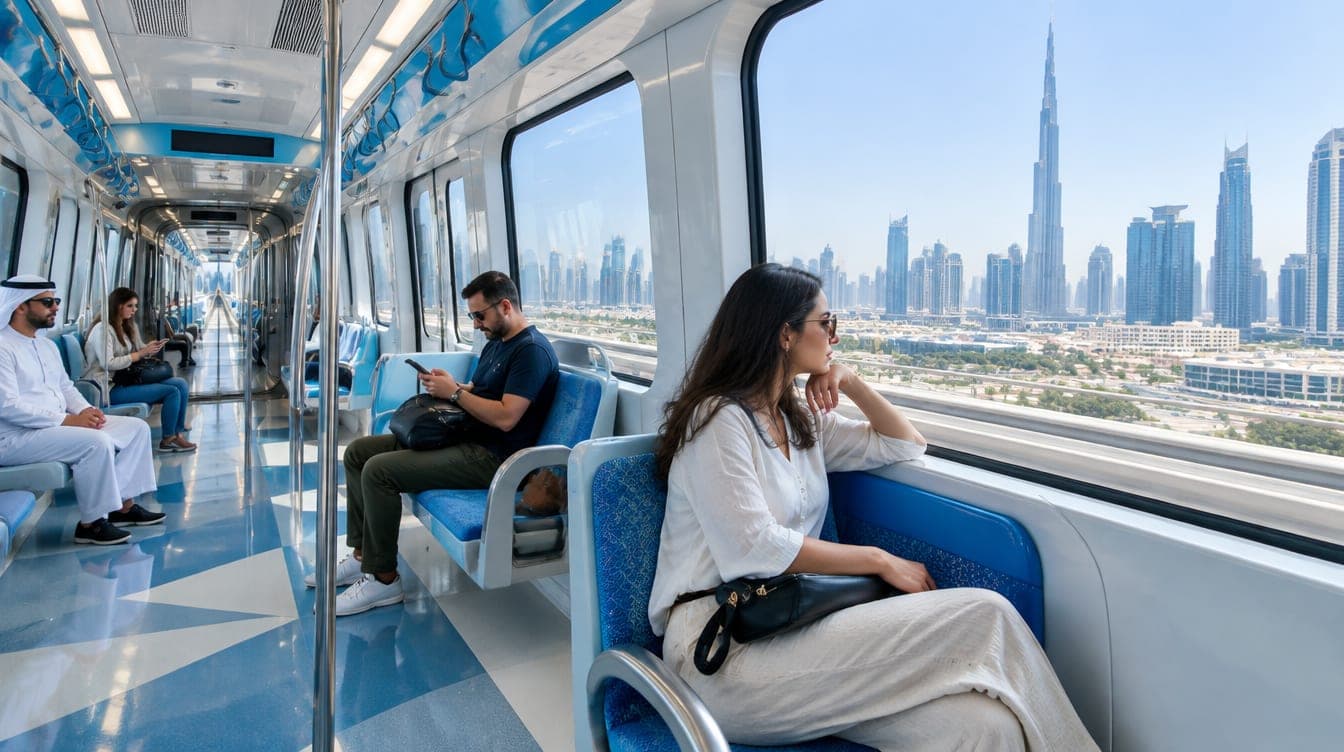
The most central beaches are easy to reach without a car: the Metro plus the tram gets you to the Marina and JBR, and taxis and ride-hailing reach every beach cheaply. For the Jumeirah-coast beaches and Al Mamzar a taxi or a rental car is simplest, as public transport is thinner there.
If you are driving, most public beaches have paid parking that fills up on weekends, so arrive early. A rental car makes the quieter beaches and a beach-plus-sightseeing day much easier to combine; otherwise, base yourself near JBR or the Jumeirah coast and walk.
Frequently asked questions
What are the best free beaches in Dubai?
The best free public beaches are JBR (The Beach), Kite Beach, La Mer, Umm Suqeim (Sunset Beach, for the Burj Al Arab view) and Jumeirah Open Beach. They are open to everyone, and the main stretches have showers, cafés and watersports. Al Mamzar Beach Park, further north, is a quieter option with a small entry fee.
Do you have to pay for beaches in Dubai?
No — the main public beaches are free. You only pay if you choose a beach club or a hotel day pass, which buys sunbeds, pools, towels and food, or for the small entry fee at a beach park like Al Mamzar. Parking at public beaches is usually paid.
Which Dubai beach is best for families?
Kite Beach and Al Mamzar are popular with families for their space, facilities and calm water, and JBR/The Beach is handy for having cafés, shops and watersports all in one place. Look for beaches with lifeguards and shallow, gentle water for young children.
Which beach has the Burj Al Arab view?
Umm Suqeim Beach, often called Sunset Beach, is the classic spot for the Burj Al Arab backdrop, especially at sunset. Kite Beach, a little further along the same coast, also has the hotel in view.
Can you swim at Dubai's beaches year-round?
Yes. The sea is swimmable all year — coolest in winter but still comfortable, and bath-warm in summer. Beach weather is at its best from October to April; in summer most people swim early morning or evening and keep midday for pools and waterparks. Always check the lifeguard flags.
What are the rules on Dubai beaches?
Ordinary swimwear is fine on the beach, but cover up when you leave it. Public drinking is not allowed on the beaches, and during Ramadan eating and drinking in public in daylight is restricted. Swim near lifeguards, follow the coloured-flag system, and watch the strong sun year-round.
Written by the TripReview team from our own price benchmarks and the rules published by UAE authorities, and updated 8 October 2026. Figures are ranges, not quotes — check the latest rules with the official source before you travel. How we rate companies