Table of contents
Quick answer
Dubai stays fully open to tourists during Ramadan — malls, attractions, hotels and beaches all run, and in recent years most restaurants stay open through the day too. Muslims fast from dawn to sunset; you are not expected to fast, but it is polite to be discreet about eating, drinking and smoking in public during daylight. The highlight is iftar, the meal that breaks the fast at sunset, when the city comes alive — a great experience to book. Days are quieter and some hours shift, nights are busy and atmospheric, and hotel rates can be lower. The dates move about eleven days earlier each year, so check them for your trip.
What Ramadan is, and when it falls
Ramadan is the Islamic holy month, when Muslims fast from dawn to sunset — no food, drink or smoking in daylight hours — and focus on prayer, charity and family. It lasts about 29–30 days and ends with the Eid al-Fitr holiday. Because it follows the lunar calendar, it moves about eleven days earlier each year, so check the dates for the year you are travelling.
For a visitor, Ramadan changes the rhythm of the day rather than closing the city: quieter, slower daytimes and busy, celebratory evenings. None of it stops you enjoying Dubai, and some of it — the iftar tents, the night markets, the atmosphere after sunset — is a reason to come.
What's open during Ramadan?
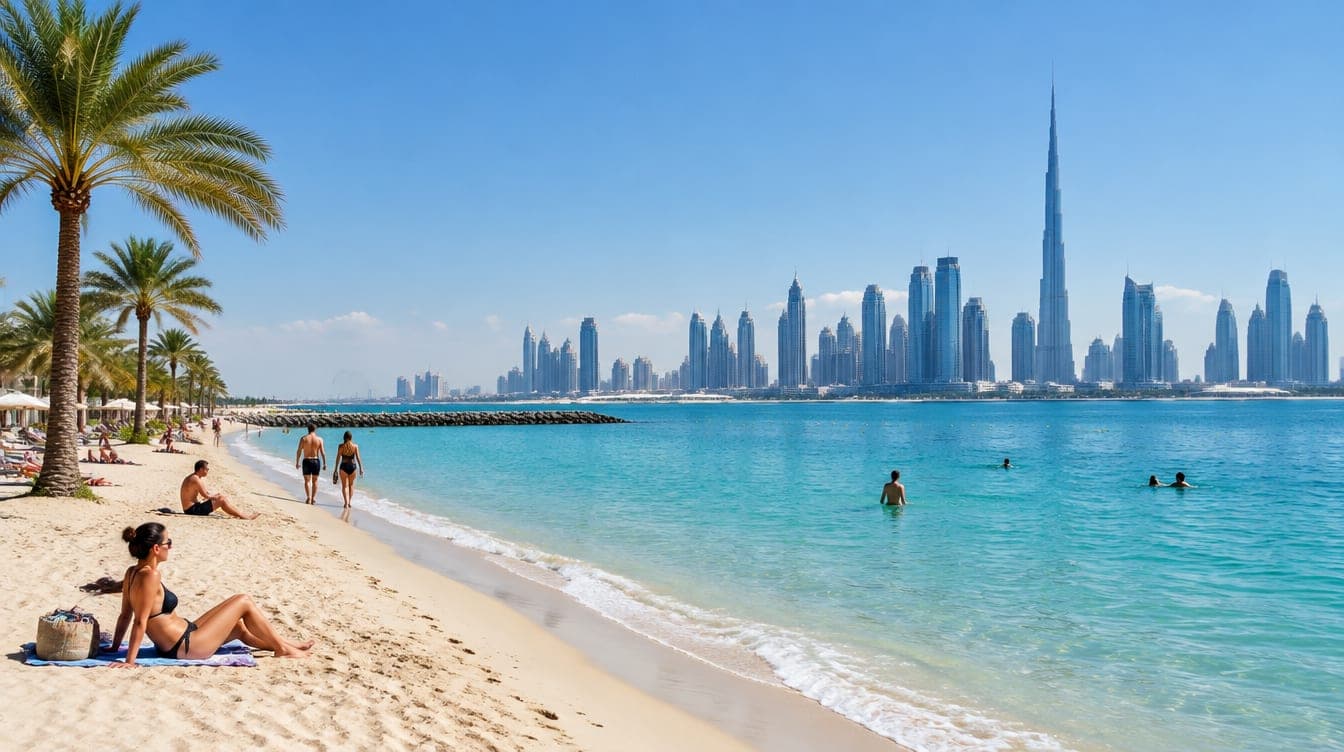
Almost everything. Malls, the big attractions, theme parks, hotels, beaches and tours all operate, and malls in particular stay open late into the night. Hours shift rather than shrink — many places open a little later and close later, with the evening the busy part of the day.
Eating out is easier than it used to be. In recent years most restaurants and cafés stay open and serve through the day, where once many closed or screened off their dining rooms until sunset. Your hotel will serve food and drink to guests throughout. What changes most is the tempo, not the availability.
Eating, drinking and smoking in the daytime
As a non-Muslim visitor you are not expected to fast, and you can eat and drink in restaurants, your hotel and your room as normal. What is asked is discretion in public during fasting hours: historically eating, drinking or smoking in the street or other public places in daylight was not allowed, and while Dubai has relaxed this in recent years, it is still courteous to avoid doing it openly in front of people who are fasting.
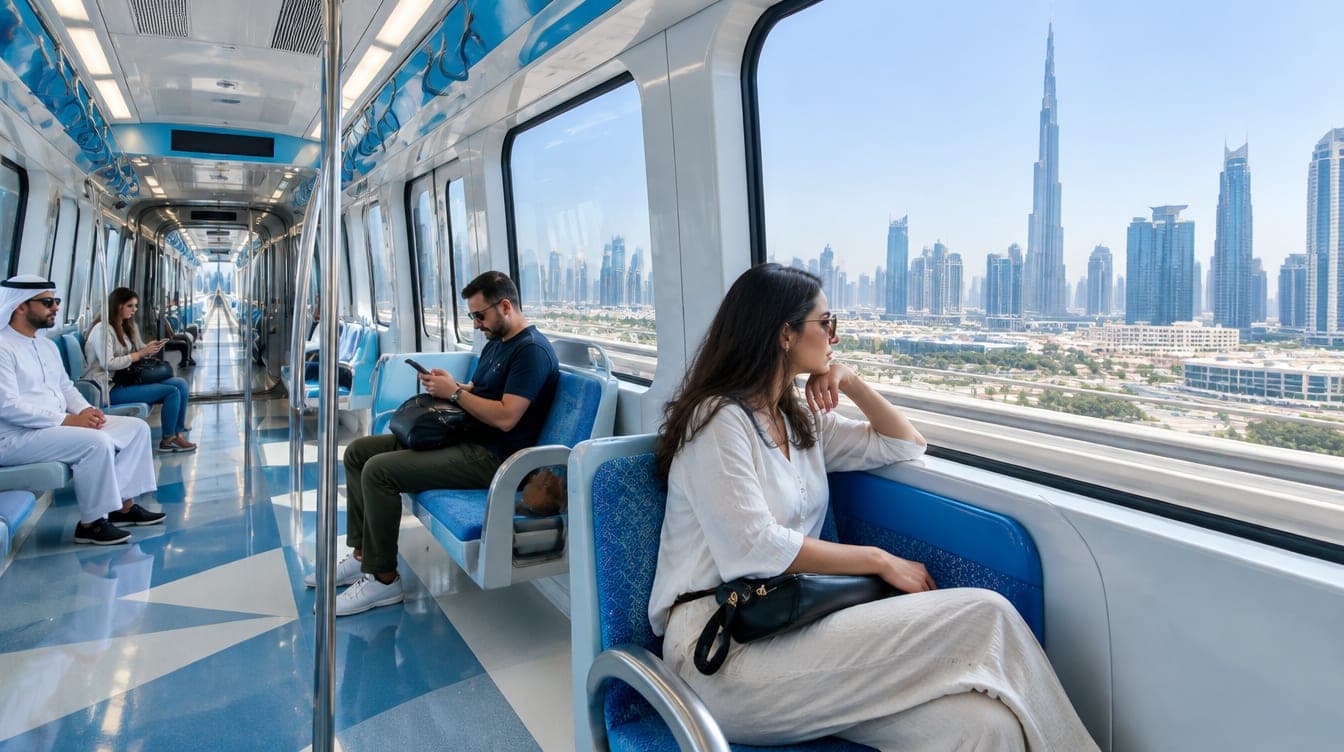
In practice: eat inside a café or restaurant rather than walking down the street with food, keep water out of sight on public transport in the daytime, and save the cigarette for a private spot. It is good manners rather than a hoop to jump through, and locals appreciate it.
Carry a water bottle in your bag rather than your hand on hot days, and drink it discreetly. No one minds a tourist staying hydrated — the courtesy is simply not to do it conspicuously in front of someone fasting.
Iftar: the best of Ramadan for a visitor
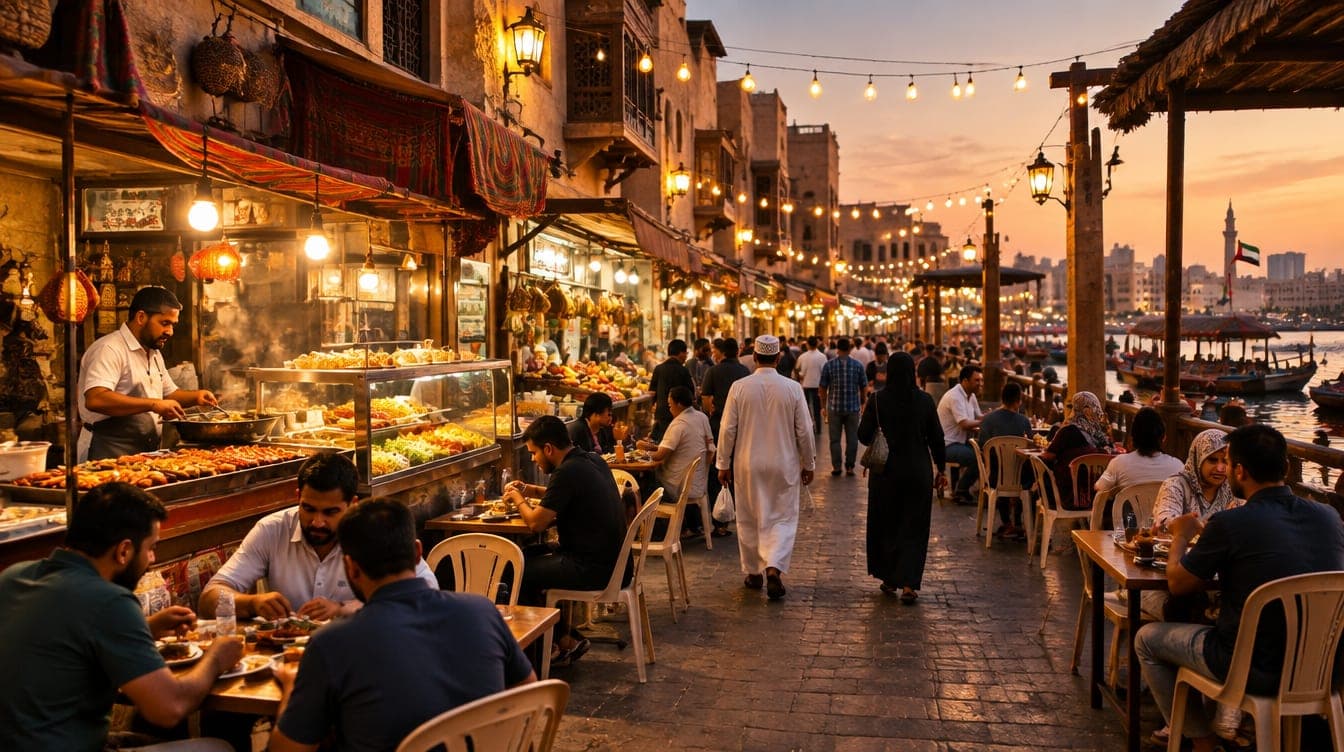
Iftar is the meal that breaks the fast at sunset, and it is the experience to seek out. As the call to prayer sounds, the city exhales — families and friends gather, hotels and restaurants lay on lavish iftar buffets, and traditional tents serve dates, Arabic coffee and a huge spread. Booking an iftar is one of the most memorable things a visitor can do during the month.
Later comes suhoor, a lighter meal before dawn, often served late into the night with shisha and live oud music in tents and lounges. Between the two, the evenings are social and festive — the heart of Ramadan, and open to visitors.
Ramadan etiquette for visitors
- Be discreet with food, drink and cigarettes in public during daylight — eat inside, not on the street.
- Dress a little more modestly than usual, especially around mosques and in traditional areas.
- Keep music, noise and public affection low-key in the daytime out of respect for those fasting.
- Be patient and kind to staff who are fasting — service can be a touch slower in the afternoon.
- A warm 'Ramadan Kareem' is the standard greeting and always welcome.
- Alcohol is still served in licensed venues, but daytime service may be limited; be especially discreet.
- Accept an invitation to iftar if you get one — it is a generous gesture and a highlight of the month.
Is Ramadan a good time to visit Dubai?
It depends on the trip you want. If you are after non-stop daytime activity, bars and a packed party schedule, Ramadan is quieter during the day and some nightlife is toned down, so another month may suit you better. If you want a calmer, more cultural trip — with the iftar experience, atmospheric evenings, fewer daytime crowds and often lower hotel rates — Ramadan is a rewarding and distinctive time to come.
Either way it is easy: the attractions are open, eating out is straightforward, and the only real adjustment is a little daytime discretion. Many visitors who come during Ramadan rate the evenings as the highlight of their trip.
Frequently asked questions
Can tourists eat and drink during the day in Ramadan in Dubai?
Yes — you are not expected to fast, and you can eat and drink in restaurants, cafés, your hotel and your room, most of which stay open through the day now. The courtesy is to be discreet in public during fasting hours: eat inside rather than on the street, and keep water and cigarettes out of sight. Dubai has relaxed the old public rules in recent years, but discretion is still appreciated.
Is Dubai open during Ramadan?
Yes, fully. Malls, attractions, theme parks, hotels, beaches and tours all operate, with malls open late into the night. Hours shift rather than shrink — places tend to open and close a little later, with the evening the busy part of the day.
What is iftar, and can tourists join?
Iftar is the meal that breaks the fast at sunset, and visitors are very welcome. Hotels, restaurants and traditional tents lay on lavish iftar buffets, and booking one is one of the most memorable things to do during Ramadan. Suhoor, a lighter meal before dawn, is also served late into the night.
Should I visit Dubai during Ramadan?
If you want a calmer, more cultural trip — the iftar experience, atmospheric evenings, fewer daytime crowds and often lower hotel rates — it is a rewarding time to come. If you want non-stop daytime activity and a busy party scene, another month may suit better, as days are quieter and some nightlife is toned down. The attractions are open either way.
Can you drink alcohol in Dubai during Ramadan?
Licensed venues generally still serve alcohol during Ramadan, though daytime service may be limited in some places. Be especially discreet — public drinking is never allowed and is particularly inappropriate during fasting hours. Check with your hotel or the venue for their arrangements.
How should tourists dress during Ramadan in Dubai?
A little more modestly than usual — cover shoulders and knees in public and traditional areas, and keep beachwear to the beach and pool. It is the same guidance as the rest of the year but worth a touch more care during the holy month, especially near mosques.
When is Ramadan in Dubai?
Ramadan follows the lunar calendar and moves about eleven days earlier each year, lasting roughly 29–30 days and ending with Eid al-Fitr. Check the exact dates for the year you are travelling, as they are confirmed close to the time by moon sighting.
Written by the TripReview team from our own price benchmarks and the rules published by UAE authorities, and updated 7 October 2026. Figures are ranges, not quotes — check the latest rules with the official source before you travel. How we rate companies