Table of contents
Quick answer
Dubai's public transport runs on one tap-in, tap-out Nol card: a driverless Metro along Sheikh Zayed Road, a tram in the Marina, buses that reach where the Metro doesn't, and abras and water buses across the Creek. For a central, city-only trip the Metro plus the odd taxi is the cheapest and easiest way around; for the beaches, day trips and anywhere off the line, a taxi, a ride-hailing app or a rental car fills the gaps. Buy a Silver Nol card at any station, load some credit, and tap in and out of every ride.
Start with a Nol card
Almost everything public in Dubai runs on one card — the Nol card. It covers the Metro, the tram, public buses, the water bus and even public parking, and you tap it on the way in and again on the way out so the system can charge the right fare. Buy one the moment you arrive and tickets stop being something you think about.
For a visitor the standard Silver Nol card is the one to get: a few dirhams for the card, then credit loaded on top. There is also a Red paper ticket for the odd single trip, a Gold card that buys the premium Gold Class cabin, and a personalised Blue card for residents. You can buy and top up a card at any Metro station — at the ticket office or the machines — and at many shops. Our Nol card guide covers the types, costs and top-ups in full.
Load a little more than you think you need. A card low on credit will not let you tap in, and topping up means queuing just as you are trying to catch a train.
Riding the Dubai Metro
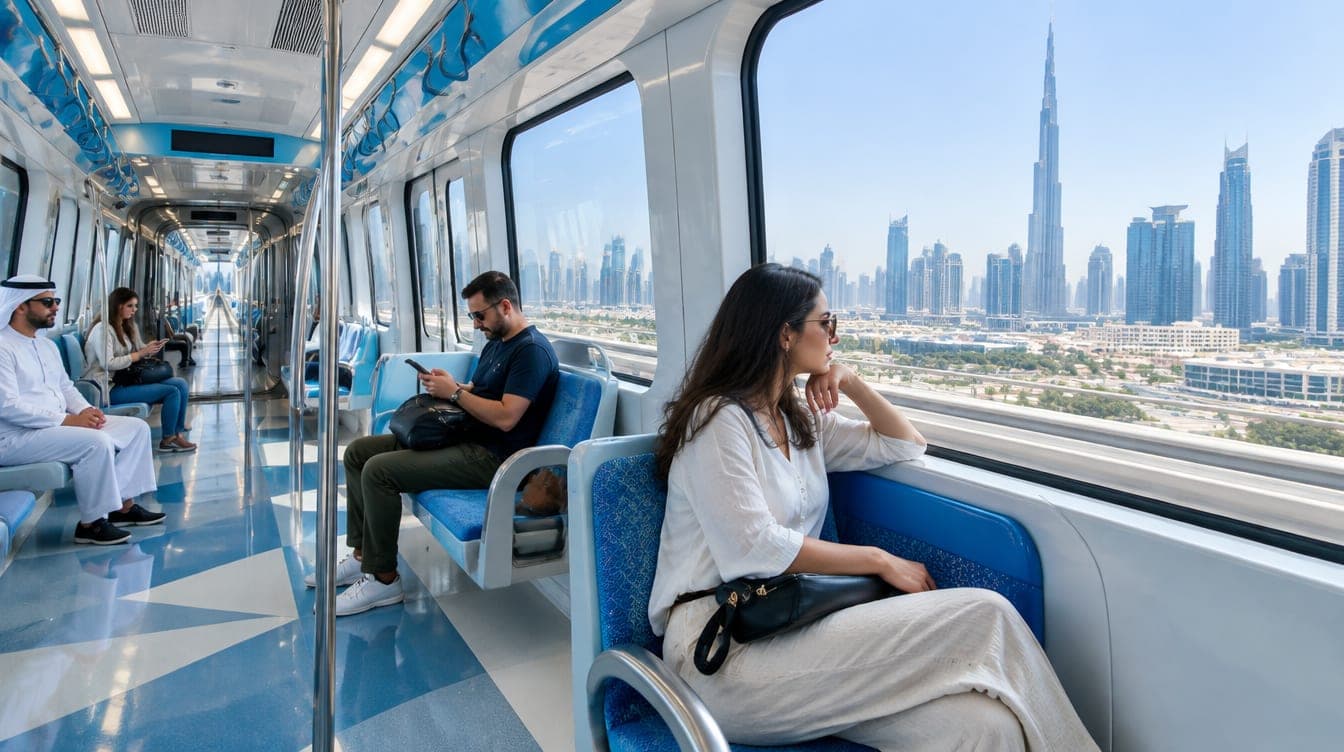
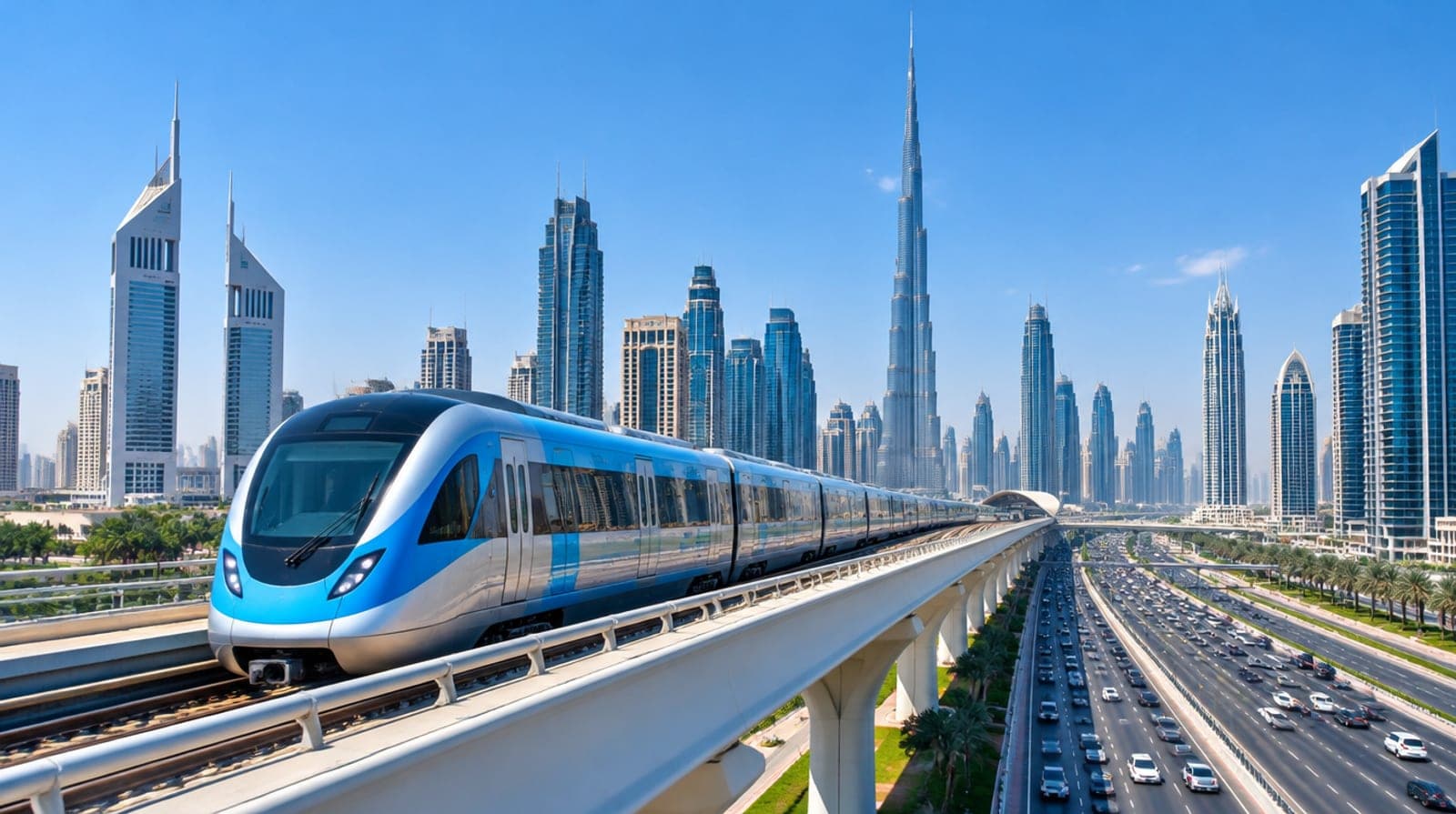
The Metro is the backbone of getting around the city: clean, driverless, air-conditioned and cheap. There are two lines. The Red Line runs the length of Sheikh Zayed Road — past Downtown, Business Bay, the Marina and on to Expo City — and it serves Dubai International Airport (DXB). The Green Line loops through older Dubai around the Creek. The two meet and interchange at BurJuman and Union.
Fares work by distance, split into zones, which is why you tap in at the start and tap out at the end — the gate works out how many zones you crossed and deducts the fare, a few dirhams for most city trips. Forget to tap out and you are charged the maximum, so make it a habit. Exact fares and zones change, and the RTA publishes the current ones.
| Trip | Rough fare |
|---|---|
| Within one zone | Rough farearound AED 3 |
| Across two zones | Rough farearound AED 5 |
| Three or more zones | Rough farearound AED 7.5 |
| A day pass (unlimited that day) | Rough farearound AED 20 |
Fares are set by the RTA and change — check the current table before you rely on these.
Metro timings
The Metro runs from early morning until around midnight, with later hours on Friday and Saturday nights. Start times shift on Fridays and during Ramadan, and the RTA adjusts the hours for public holidays — so if you are travelling late or early, check the day's times on the RTA's S'hail app before you set out.
Gold Class, the Women and Children cabin, and the rules
- Gold Class is the cabin at the front of the train — more space and a view down the track — for double the normal fare. You need a Gold Nol card, or Gold credit, to ride it.
- The Women and Children cabin is reserved: men who ride it can be fined, so watch for the pink markings on the platform and the train.
- No eating or drinking on the Metro, in the stations or on the trains — not even water — and there are fines for it, as there are for sitting on the floor or riding without a valid, tapped-in card.
- Priority seats are for People of Determination, older passengers and pregnant women. The Metro is step-free and well set up for wheelchairs and prams.
Avoid the rush (roughly 7–9am and 5–8pm) if you can, especially on the Red Line through Downtown and the Marina — it is as busy as any big-city metro.
Which station for the main sights
Most of the big sights sit on or near the Red Line, though several need a short taxi, tram or walk at the end — the Metro runs along the main spine, not to every door.
| Where you're going | Nearest station | Then |
|---|---|---|
| Burj Khalifa & Dubai Mall | Nearest stationBurj Khalifa / Dubai Mall | ThenA long air-conditioned walkway, or the free mall shuttle |
| Dubai Marina & JBR | Nearest stationA Marina Red Line station | ThenChange to the Dubai Tram for the Marina and JBR |
| Mall of the Emirates & Ski Dubai | Nearest stationMall of the Emirates | ThenDirect — the station is at the mall |
| Old Dubai, the souks & the Creek | Nearest stationAl Ghubaiba or Al Ras (Green Line) | ThenA short walk, then an abra across the Creek |
| Expo City Dubai | Nearest stationExpo 2020 (Red Line) | ThenDirect |
| Palm Jumeirah & Atlantis | Nearest stationA Marina station, then the tram | ThenTram to the Palm, then the Palm Monorail |
| Dubai International Airport (DXB) | Nearest stationAirport Terminal 1 or 3 | ThenDirect — see our airport Metro guide |
The tram is on the Nol card; the Palm Monorail is separate. Station names on the network change from time to time, so check current names when you plan.
The Dubai Tram and the Palm Monorail
The Dubai Tram runs through the Marina, JBR and Al Sufouh, and it fills the Metro's biggest gap on the tourist side — it connects to the Red Line at the Marina and runs on the same Nol card. If you are staying in the Marina or JBR, you will use it a lot.
The Palm Monorail is a separate line out along Palm Jumeirah to Atlantis. It is not on the Nol card and is priced on its own, so treat it as an attraction ride rather than part of the transport network.
Buses, including to Abu Dhabi and Sharjah
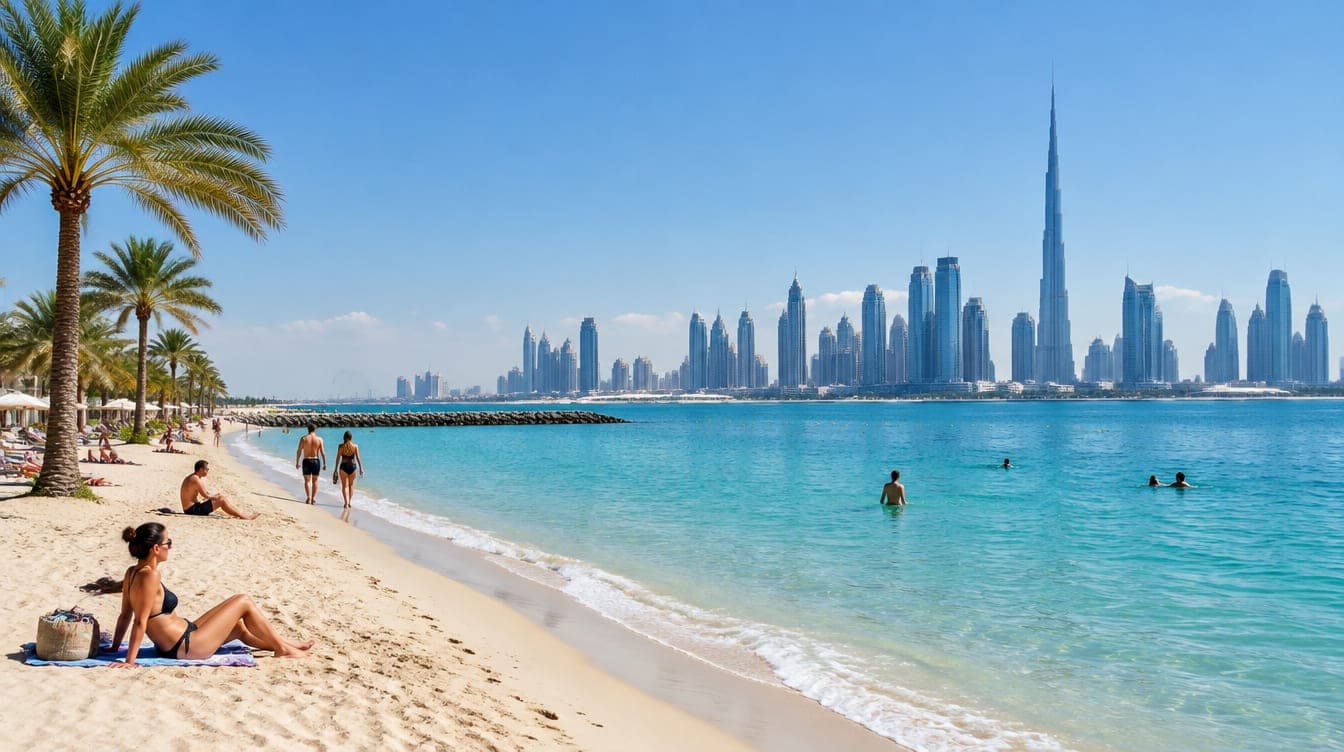
Public buses reach the many places the Metro and tram do not, all on the same Nol card and all air-conditioned, down to the bus shelters. For a visitor they are most useful for the beaches and residential areas off the line — plan the route in the RTA's app, as the network is large.
Buses also run between the emirates: regular intercity coaches to Abu Dhabi (from Ibn Battuta and Al Ghubaiba) and to Sharjah, which is the cheap way to make the trip without a car. For a day trip with stops, though, renting a car or a private transfer is usually easier.
On the water: abras, water buses and ferries
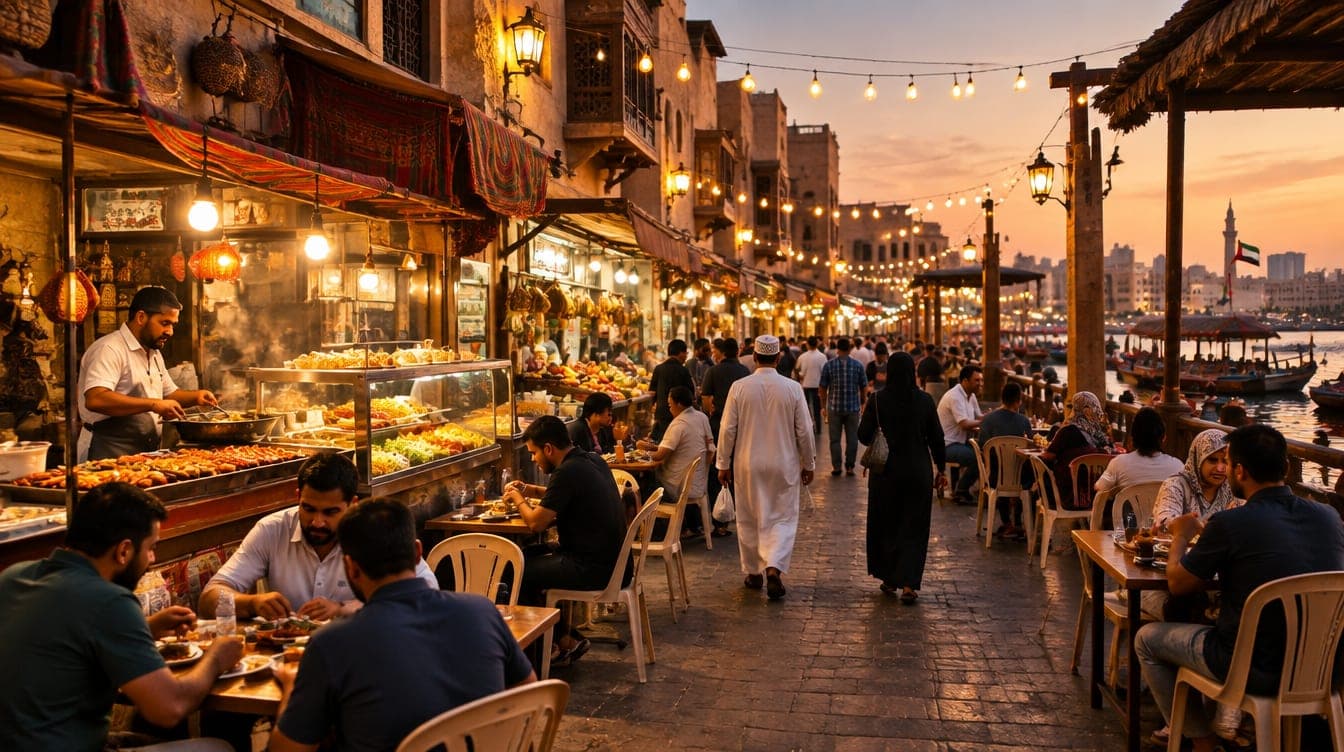
- The abra — a wooden water taxi across Dubai Creek — costs a dirham or two and is one of the best-value things to do in old Dubai, not just a way to cross.
- The water bus and water taxi run on the Creek and around the Marina, on the Nol card, in more comfort than the abra.
- The Dubai Ferry runs scenic routes along the coast and the Marina — more of a sightseeing trip than transport, but a good one.
Apps, payment and a few tips
- Download the RTA's S'hail app for live Metro, bus and tram times, routes and fares, and Careem or Uber for when you need a door-to-door ride.
- Google Maps covers Dubai's public transport well for planning a route end to end.
- Carry a little cash for abras and the odd taxi, even though cards work almost everywhere.
- In summer, plan around the air conditioning — the Metro, the malls it connects to and the covered walkways let you cross much of the city without stepping into the heat.
When public transport isn't enough
The Metro and buses are cheapest and easiest for a central, city-only stay. They start to fall short when you want the beaches and attractions off the line, when you are travelling as a family with luggage, or when you want a day trip to Hatta, Al Ain or the East Coast — the network simply does not go there.
For those, a taxi or a ride-hailing app covers the short hops, and renting a car pays off for the day trips and the freedom to stop where you like. Our guide to getting around Dubai weighs up the Metro, taxis, Careem, Uber and a rental side by side so you can match the choice to your trip.
Frequently asked questions
How much does the Dubai Metro cost?
Fares are by distance and paid from a Nol card — a few dirhams for a city trip, from about AED 3 within one zone to about AED 7.5 across three or more, at the time of writing. A day pass for unlimited travel is around AED 20. The RTA sets and changes the fares, so check the current table.
Do I need a Nol card to use the Dubai Metro?
Yes — you tap a Nol card in and out of every Metro, tram, bus and water-bus trip. A standard Silver card is the one most visitors buy, and you can get it and top it up at any Metro station.
What are the Dubai Metro timings?
The Metro runs from early morning until around midnight, with later hours on Friday and Saturday nights. Start times shift on Fridays and in Ramadan, and change for public holidays, so check the current times on the RTA's S'hail app before travelling late or early.
Does the Dubai Metro go to the airport?
Yes — the Red Line serves Dubai International Airport (DXB) at the Terminal 1 and Terminal 3 stations. Al Maktoum (DWC) is reached differently; see our airport guides for the detail.
Is the Dubai Metro good for tourists?
Very — it is clean, cheap, air-conditioned, driverless and runs along the main tourist spine from Downtown to the Marina and the airport. Its limit is that it follows that spine, so the beaches, the Palm and areas off Sheikh Zayed Road need a tram, bus or taxi at the end.
Can I pay for the Dubai Metro with a credit card or contactless?
No — you pay from credit loaded onto a Nol card, not by tapping a bank card at the gate. Buy and top up a Nol card at any station ticket machine or office.
How do I get to Palm Jumeirah by public transport?
Take the Red Line to the Marina, change to the Dubai Tram, and then the Palm Monorail out to Atlantis. The Metro and tram use your Nol card; the Palm Monorail is a separate, separately-priced service.
What is the difference between Gold Class and standard on the Metro?
Gold Class is the cabin at the front of the train, with more space and a forward view, for double the standard fare. You need a Gold Nol card or Gold credit to use it; everything else about the journey is the same.
Written by the TripReview team from our own price benchmarks and the rules published by UAE authorities, and updated 13 October 2026. Figures are ranges, not quotes — check the latest rules with the official source before you travel. How we rate companies