Quick answer
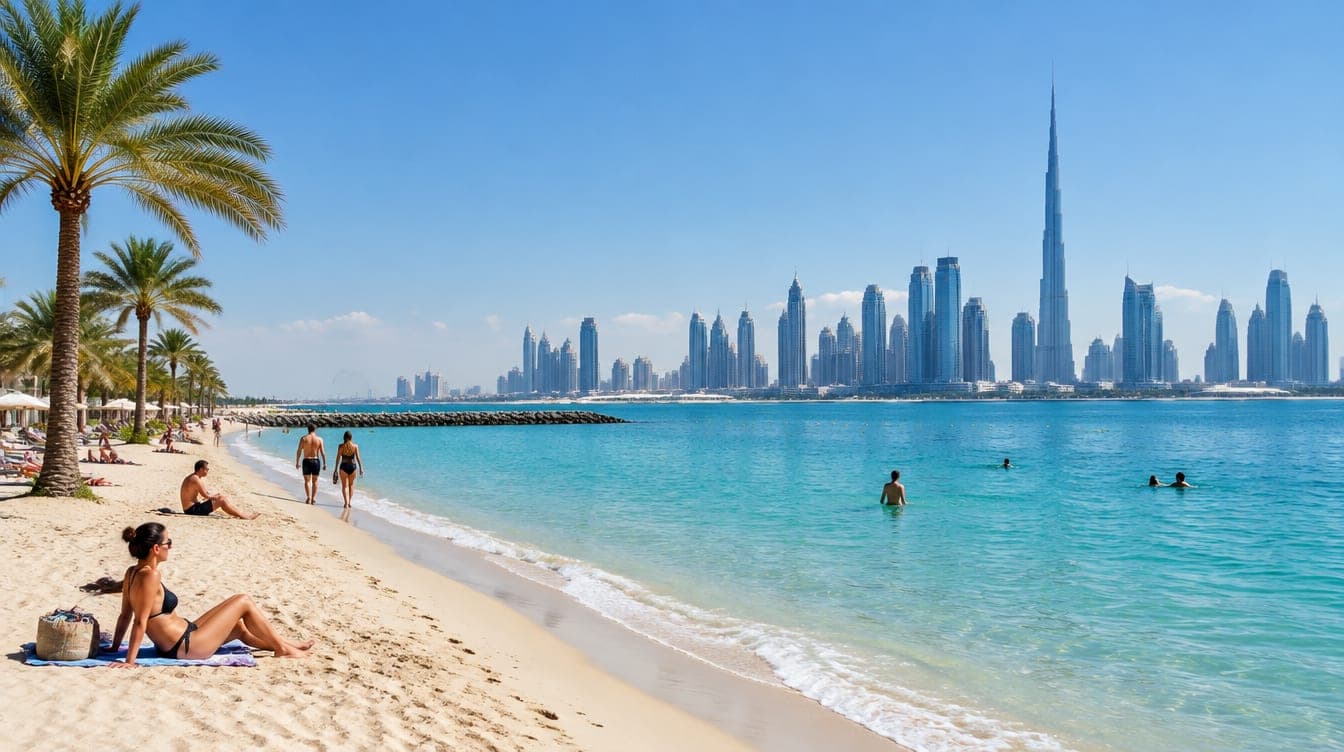
Winter, roughly November to March, is Dubai's best season and its busiest. Days are warm and sunny rather than hot — typically around the mid-20s to low-30s °C — with cool evenings and very little rain, so everything outdoors is in season: the desert, the beaches, the rooftops and walking old Dubai. It is also peak tourist season, which means the highest hotel prices and the biggest crowds, especially from mid-December to February and around New Year. The outdoor events cluster here too — Global Village, the Dubai Shopping Festival and the outdoor-dining and beach-club season — though exact 2026 dates are set year by year, so check close to your trip. Pack light clothes for the day, a layer for cool evenings and strong air-conditioning, and swimwear. If comfortable weather matters more than price, winter is when to come.
What the weather is actually like
Winter is why so many people visit Dubai between November and March. Daytime temperatures are typically in the mid-20s to low-30s °C — warm and sunny rather than the punishing heat of summer — and evenings are cooler, sometimes enough for a light jacket by the water or in the desert. Rain is uncommon and usually brief when it comes, though the occasional wet or windy day does happen, so check a forecast rather than assuming unbroken sun.
The shoulder months at each end (November, and March into April) are a sweet spot: still warm and clear but slightly less crowded and less expensive than the mid-winter peak. The sea is cooler than in summer but still swimmable, and the desert nights can be genuinely cold, which is worth knowing before an overnight safari.
Crowds and prices in peak season
The trade-off for the perfect weather is that winter is high season. Hotels are at their most expensive and their busiest, particularly from mid-December through February and over the New Year, when the Burj Khalifa fireworks draw huge numbers. Popular restaurants, brunches, desert safaris and day trips book out, and the big sights have their longest queues.
Booking ahead matters more in winter than at any other time — flights, hotels, the Burj Khalifa, and anything around New Year's Eve especially. If you want the winter weather without the very top of the price curve, aim for November or late February and March rather than the Christmas-to-New-Year window.
New Year's Eve is spectacular but intense — book dinner, transport and any viewing spot for the Burj Khalifa fireworks well in advance, and expect road closures and packed public transport around Downtown.
The big winter events
Dubai's outdoor event calendar runs on the cool season, so winter is when most of the headline happenings open up. These are the ones worth planning around, but their exact 2026 dates are set each year — confirm them close to your trip rather than relying on last year's.
- Global Village — the huge open-air world-cultures market, funfair and food destination, open through the cooler months only.
- Dubai Shopping Festival — the winter sales-and-entertainment season, with discounts, markets and nightly events.
- Outdoor concerts, festivals and sport — the comfortable weather brings a dense run of music, food and sporting events; check what is on for your dates.
- Beach clubs and alfresco dining — terraces, rooftops and beach clubs are all in full swing, which they are not in the summer heat.
- New Year's Eve — the Burj Khalifa and Palm fireworks are among the world's biggest, with the city busy for days around the turn of the year.
Making the most of the season
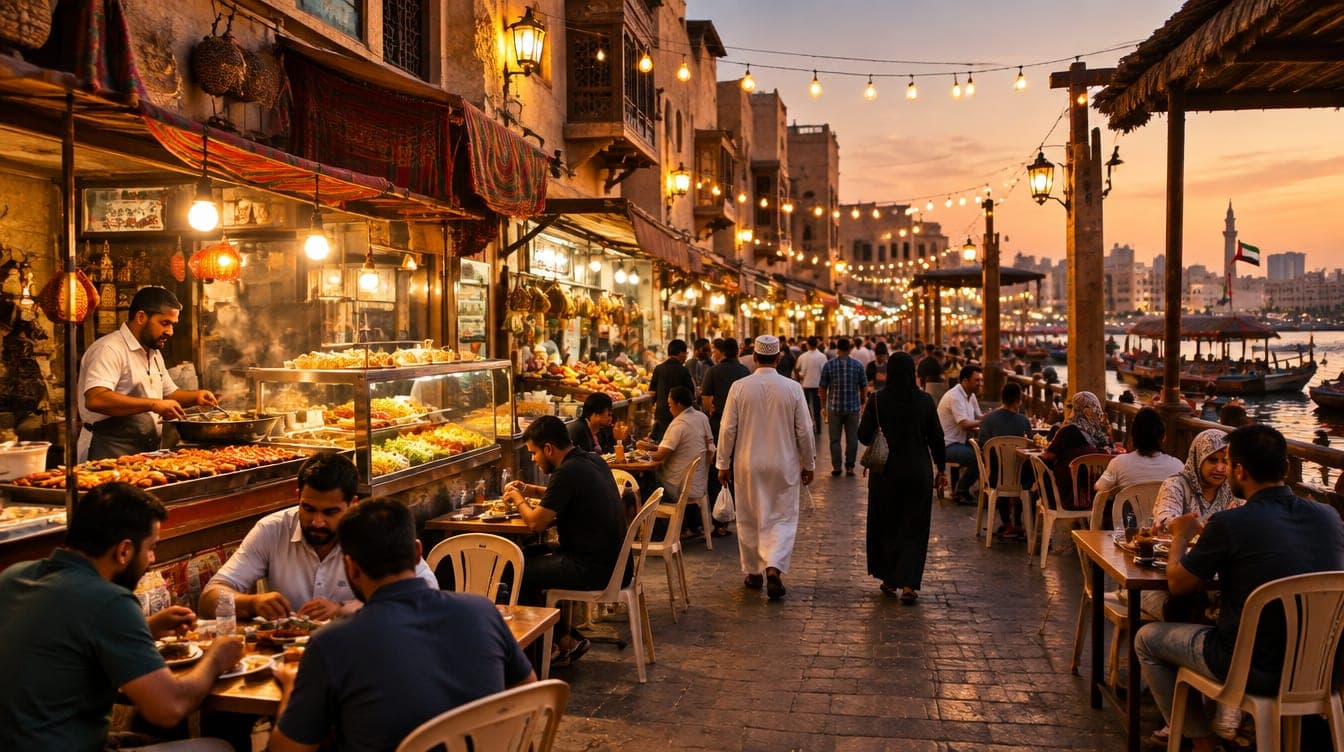
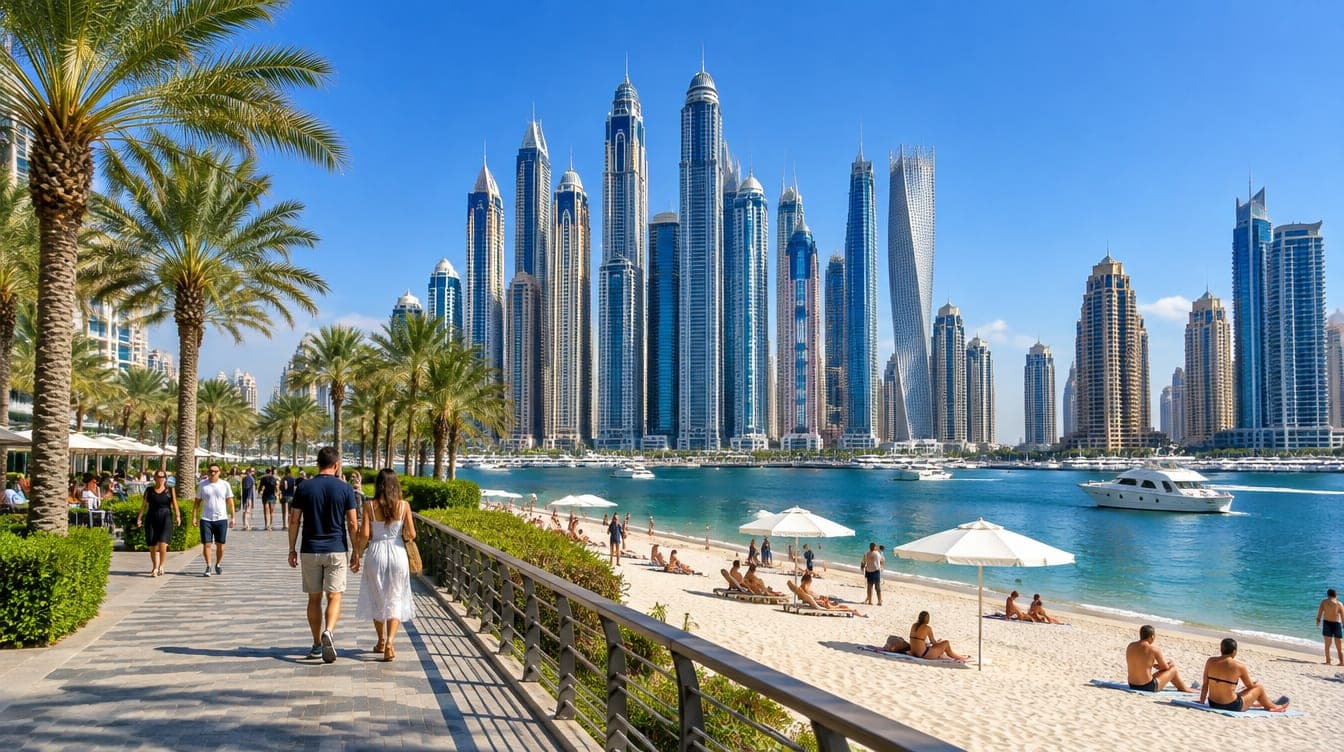
Winter is the time to do everything Dubai does outdoors. A desert safari is far more comfortable than in the heat, the public beaches and beach clubs are at their best, and walking the Creek and old Dubai or lingering on a rooftop is a pleasure rather than an endurance test. A day on the water — yacht charters or a sunset cruise — is ideal, and dawn is cool enough for a hot-air balloon over the dunes.
Because the weather is on your side, you can plan a fuller day than in summer — morning and evening both work, not just the edges of the day — and day trips are comfortable, with Abu Dhabi, Hatta and the mountains all within easy reach. Save a couple of indoor options (a mall, an aquarium, a museum) for the rare wet or windy afternoon.
What to pack for a Dubai winter
- Light daytime clothes — it is still warm in the sun; shorts, light tops and comfortable shoes for walking.
- A layer for the evening — a cardigan, light jacket or shawl for cool nights, breezy waterfronts, desert evenings and strong indoor air-conditioning.
- Swimwear — the beaches and pools are in season, so pack for the water even in 'winter'.
- Modest options — something that covers shoulders and knees for the mosques, the souks and more traditional areas; a scarf is useful.
- Sun protection — the winter sun is still strong; sunscreen, sunglasses and a hat.
- A light rain layer is rarely needed but harmless if you want to be safe on a shoulder-month trip.
Is winter the best time to visit Dubai?
For most visitors, yes — winter is the most comfortable and the most alive time to be in Dubai, with every outdoor attraction and event in season. The only real downsides are the price and the crowds, both of which peak around Christmas and New Year.
If budget matters more than perfect weather, the summer is far cheaper and the city simply moves indoors; if you want a middle ground, the shoulder months at each end of winter give you most of the upside for less. See the best-time-to-visit guide for a month-by-month comparison.
Frequently asked questions
What is the weather like in Dubai in winter?
Warm and sunny rather than hot — daytime temperatures are typically in the mid-20s to low-30s °C from November to March, with cooler evenings and very little rain. It is the most comfortable time of year to be outdoors, though the odd wet or windy day happens, so check a forecast.
Is winter a good time to visit Dubai?
It is the best season for weather and the busiest for tourism. Everything outdoors — the desert, the beaches, the rooftops, old Dubai — is in season, and the big events run now. The trade-off is peak hotel prices and crowds, especially from mid-December to February and around New Year.
Is it too cold to swim in Dubai in winter?
No — the sea is cooler than in summer but still swimmable, and hotel pools are often heated. Daytime air is warm in the sun, so the beaches and pools are very much in use. Evenings and the water feel cool, so a layer for after your swim is worth having.
Why is Dubai so expensive in winter?
Winter is peak tourist season because of the near-perfect weather, so demand for hotels and flights is at its highest, particularly from mid-December through February and over New Year. Booking early, or choosing the shoulder months of November or March, keeps costs down.
What events happen in Dubai in winter?
Global Village, the Dubai Shopping Festival, outdoor concerts and festivals, the beach-club and alfresco-dining season, and the huge New Year's Eve fireworks all fall in the cool months. Exact 2026 dates are set year by year, so confirm them close to your trip.
What should I pack for Dubai in winter?
Light daytime clothes, plus a layer — a light jacket or shawl — for cool evenings, desert nights and strong air-conditioning. Bring swimwear for the beaches and pools, modest clothing for mosques and traditional areas, and sun protection, as the winter sun is still strong.
Written by the TripReview team from our own price benchmarks and the rules published by UAE authorities, and updated 8 October 2026. Figures are ranges, not quotes — check the latest rules with the official source before you travel. How we rate companies