Table of contents
Quick answer
Ras Al Khaimah suits a day trip as long as you pick between the mountain and the coast. The city is roughly 105 to 120 km from central Dubai, which takes about an hour and a quarter by car, and Jebel Jais, usually described as the UAE's highest mountain, is around 175 km and two hours each way. The mountain brings a zipline and viewpoints; the other half of the emirate brings Dhayah Fort, mangroves, beaches and a pearl farm. The caveat is that the mountain does not stay open all year: its operator announced a summer pause in late June 2026, and a reopening date for the coming season had not been confirmed when this guide was written, so check before you set out.
Why is Ras Al Khaimah the emirate for the outdoors?
Ras Al Khaimah is the emirate to choose when you want the outdoors rather than city sights. Mountains, desert, mangroves and beaches sit close together here, so one drive can take you from a mountain viewpoint to a hill fort above a palm oasis and on to the sea.
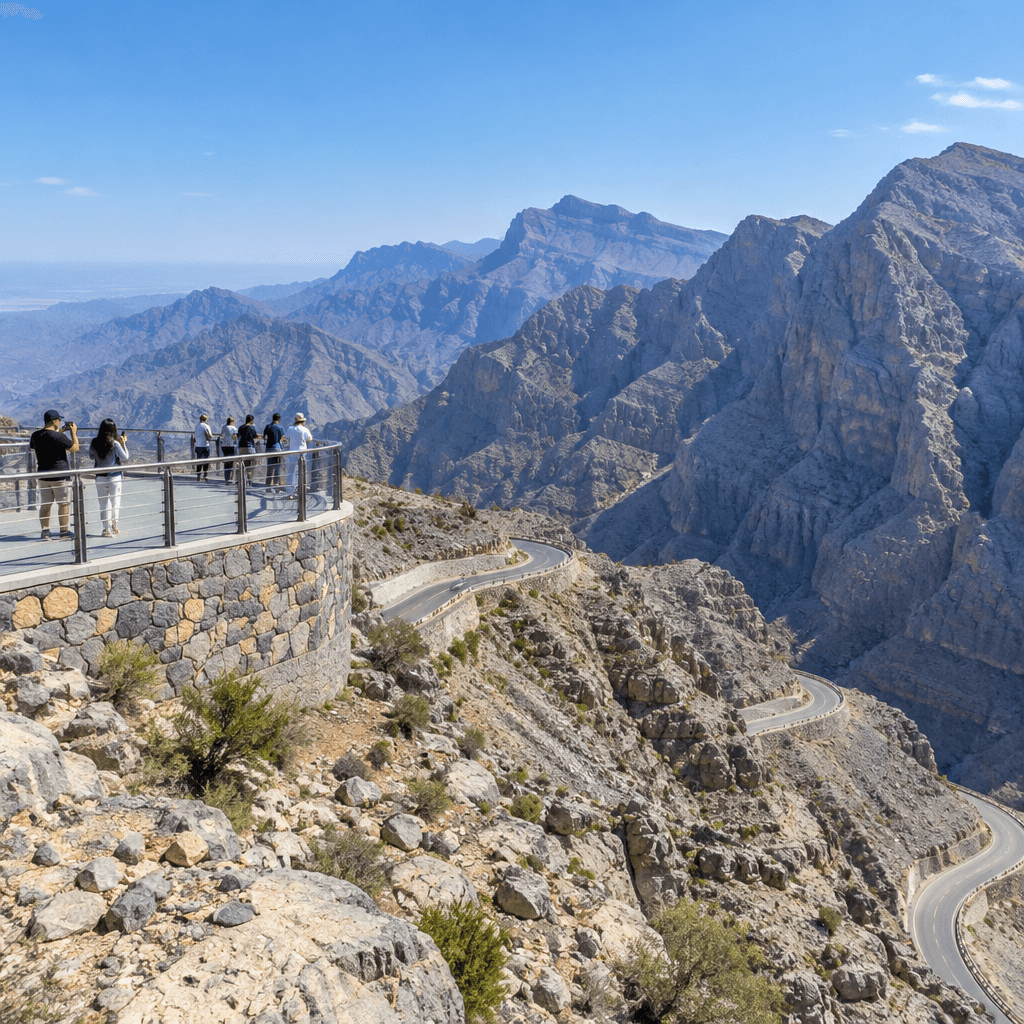
The headline is Jebel Jais, usually described as the UAE's highest mountain at about 1,900 metres, although the summit itself lies on the Omani side of the border and the public road stops below it. The drive up is part of the appeal: a long climb of hairpin bends to viewing platforms that look across the Hajar mountains. The mountain is also home to Jais Flight, a zipline about 2.8 km long that opened in 2018 and was billed as the world's longest at the time. A longer line has since opened in South Africa, but Jais Flight is still one of the longest in the world.
One caveat shapes the rest of this guide: the mountain does not stay open all year. Its operator announced a summer pause in late June 2026, it closed for several weeks after heavy rain in December 2025, and at the time of writing, in late October 2026, a reopening date for the coming season had not been confirmed. When it is open, it is the main reason to come. When it is closed, the fort, the coast and the old villages still make a worthwhile day, so the plan below covers both.
What is the drive from Dubai to Ras Al Khaimah like?
Ras Al Khaimah city is roughly 105 to 120 km from central Dubai, which is about an hour and a quarter by car in light traffic. The emirate's tourism site recommends Sheikh Mohammed bin Zayed Road (E311), with Emirates Road (E611) as the alternative, and you should allow more time at the usual morning and evening peaks.
Jebel Jais is further, at around 175 km from Dubai and roughly two hours each way, with the last stretch a winding climb. Dhayah Fort is about 25 minutes from Ras Al Khaimah city and a similar distance from the foot of the mountain, so the two combine easily.
Having your own car is the simplest way to fit the mountain, the fort and the coast into one day. Buses do run from Dubai to Ras Al Khaimah city, where the mountain then needs a taxi of roughly 30 to 45 minutes, and organised tours are the other option if you would rather not drive.
Tolls are mostly a Dubai matter. Salik gates may fall on your route out of the emirate, depending on where you start, and if you are in a rental car it is worth asking how those charges are passed on. Ras Al Khaimah has its own electronic system, Aber, which the emirate describes as a tariff system for trucks. The mountain road is paved and an ordinary car can manage it without four-wheel drive, but the bends are tight and fog or heavy rain can cut visibility, so avoid the climb in poor weather and take extra care after dark.
Fill the tank before you start the climb: there is a petrol station at the foot of the mountain and none on the road above it.
What is there to do in Ras Al Khaimah?
Jebel Jais itself is the first stop: the road climbs to terraced viewing platforms with telescopes that look across the Hajar mountains towards Oman. Allow 30 to 60 minutes there, longer if you hike one of the marked trails, and check the current entry arrangements, which changed during 2026.
Jais Flight launches from around 1,680 metres, and the Jais Sky Tour is the gentler option, with six shorter ziplines linked by a sky bridge over about 5 km and roughly two hours, which its operator describes as family-friendly. Both run on timed sessions and need booking in advance, with age, height and weight limits, and in the 2025/26 season they ran from Wednesday to Sunday and on public holidays, so check the days for the new season.
Dhayah Fort is a twin-towered mud-brick fort on a hill of around 70 metres above a date-palm oasis, where British forces and the Qawasim fought in 1819, and a zigzag climb of ten to fifteen minutes leads to views over the palms towards the sea and Oman. Entry has been free, although published opening hours disagree, so check before you go; the fort and its oasis are on the UAE's UNESCO World Heritage tentative list.
At Al Rams, near the fort, a pearl farm runs boat trips from the marina, where you watch an oyster being opened and see how cultured pearls are seeded and grown, in a trade that was once a main source of income along this coast. Tours are ticketed and listings show them lasting around two hours, so confirm times and availability first.
The coast has free public beaches, such as the public stretch near Al Hamra, and resort beaches on Al Marjan Island and elsewhere, several of which sell day passes that you arrange with the resort directly; public beaches vary and some have no facilities, so bring water, shade and food. Nearby, the abandoned pearling and fishing village of Al Jazirah Al Hamra, with houses of coral, palm trunks and shells, can be walked through without an entry charge and is also on the tentative list.
Inland, the Al Wadi desert holds a nature reserve where Arabian oryx roam, and camel rides and horse rides over the dunes are among the experiences offered there. They are bookable activities rather than places to wander into, so arrange them ahead.
Check that Jebel Jais is open and book your zipline session and any restaurant table before you leave Dubai, because a closed gate or a missed timed slot cannot be fixed once you are on the mountain.
Is one day enough, and how should you spend it?
One day is enough for either half of Ras Al Khaimah but a squeeze for both: the mountain on one side, the fort and the coast on the other. The driving alone is about two and a half hours there and back to the city, or around four hours to the mountain and back, so a day that includes the mountain is a full one. If you want a long zipline session, a hike and a meal in the same visit, a night in the emirate is more relaxed.
If the mountain is open, leave Dubai by about 7am so that you arrive around 9am, in time for a morning session. Do your booked activity, have lunch and spend time at the viewing platforms, then start down in the early afternoon so that you are off the mountain before dusk, when the bends are harder to read. Dhayah Fort is a short detour on the way back, and you should reach Dubai in the early evening, later if the roads are busy.
If the mountain is closed, or you want a gentler day, start at Dhayah Fort early, before the sun is high, then take the pearl farm tour at Al Rams, which is nearby, and have lunch by the water. In the afternoon, choose a beach or a walk through Al Jazirah Al Hamra. The pearl farm tour is the part most likely to need booking, and the whole route stays close to the coast, so you can leave Dubai by about 8am rather than 7.
When to go, what to pack and what to know
The comfortable season runs from roughly November to April, when days are milder and the mountain is at its most pleasant. Summers on the coast are very hot and humid, and the mountain is cooler by a few degrees, sometimes closer to 10°C, but in 2026 its operator paused activities over the summer, so check its status before building a summer day around it.
Pack a warm layer as well as water and sun protection, because it can turn cold on the mountain in winter and temperatures fall quickly after sunset. Zipline riders need closed-toe shoes and photo ID, either a passport or an Emirates ID, and sturdy shoes help on the fort steps, which are uneven, unlit and unsuitable for prams or wheelchairs, so go in daylight.
Food at the top is limited: book a table if you plan to eat at one of the restaurants, since at least one asks for a reservation, or bring a picnic to the designated spots, as barbecues are not allowed in open areas.
Away from resort beaches and pools, dress modestly: the official guidance for visitors to the UAE is loose clothing that covers shoulders, arms and legs, with swimwear kept for the beach and pool. Winter weekends can be busy and parking at the top of the mountain is limited at peak times, so arrive early. During Ramadan, restaurants and attractions keep different hours, so check ahead if you travel then.
Frequently asked questions
How far is Ras Al Khaimah from Dubai?
Ras Al Khaimah city is roughly 105 to 120 km from central Dubai, usually an hour to an hour and a half by car depending on the route and the traffic. Jebel Jais is further, around 175 km and about two hours each way. Dhayah Fort is about 25 minutes from the city.
Can you visit Ras Al Khaimah in a day from Dubai?
It can be done, though it is a long day. The city alone is about two and a half hours of driving there and back, and the mountain adds roughly an hour and a half more, so decide whether the day is for the mountain or for the fort and coast before you set out. A night in the emirate is more relaxed if you want a hike, a long zipline session and the coast together.
Is Jebel Jais open all year, and do you need to book?
It does not stay open all year. Its operator announced a summer pause in late June 2026, and it closed for several weeks after heavy rain in December 2025, so check the official Jebel Jais channels before you set out. The zipline, the Sky Tour and the restaurants run on timed sessions or reservations, so book ahead, especially on winter weekends.
Do you need a car to get to Ras Al Khaimah?
It is possible without one. Buses run from Dubai to Ras Al Khaimah city and organised tours go to the main attractions, but the buses stop in the city, so the mountain then needs a taxi, and a car gives you the most freedom to combine the stops. Timetables change, so check them before you rely on one.
What is Ras Al Khaimah known for?
It is known mainly for the outdoors. Jebel Jais is usually described as the UAE's highest mountain, with a zipline, viewing platforms and hiking trails, and the emirate also has Dhayah Fort above a palm oasis, mangroves, beaches, a desert nature reserve and a pearl farm that recalls its pearling past.
Written by the TripReview team from our own price benchmarks and the rules published by UAE authorities, and updated 23 October 2026. Figures are ranges, not quotes — check the latest rules with the official source before you travel. How we rate companies